
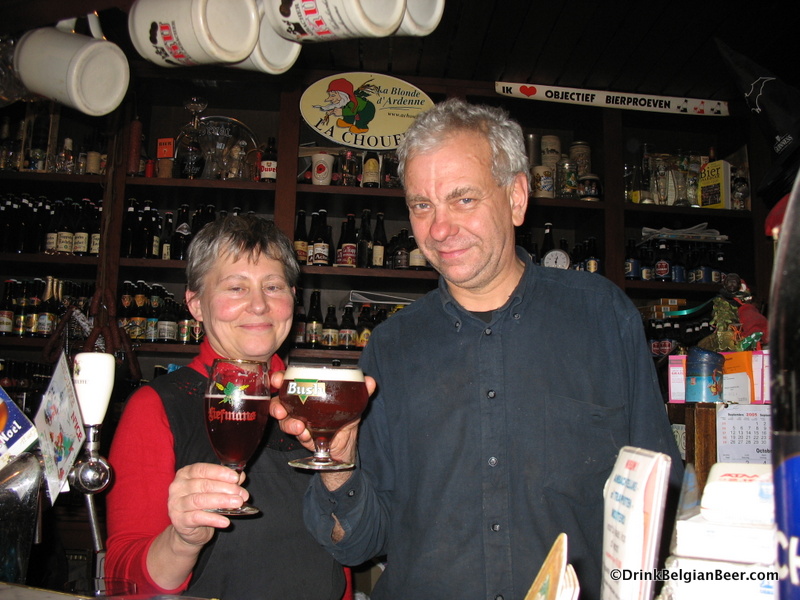
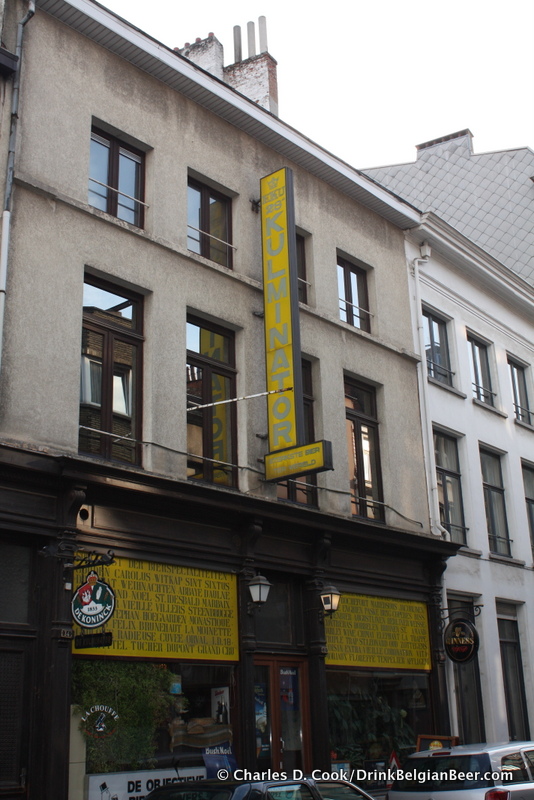
The famous Bierhuis Kulminator in Antwerpen is permanently closed. The sad news was announced on Antwerp television the first week of April, and confirmed in the Gazet Van Antwerpen newspaper.
My local sources in Antwerpen (Antwerp in English) tell me that it was known as of around January 15 that the bar, also known as De Kulminator, was closing for an indefinite period, and unlikely to ever reopen. That has sadly happened.
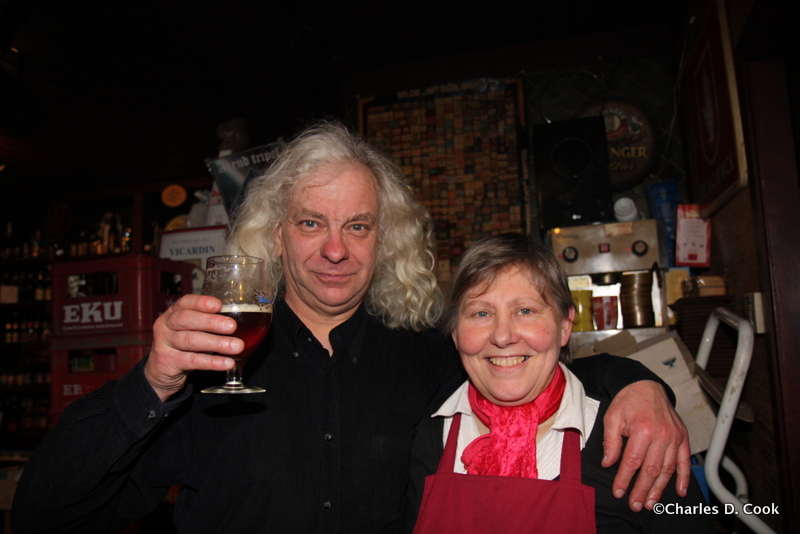
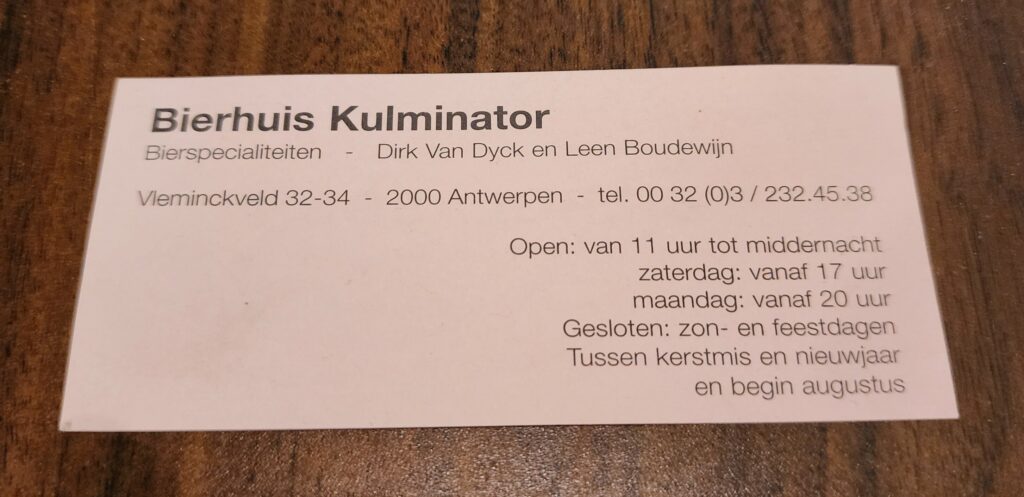
De Kulminator was the most famous bar in the world for aged/vintage beers. It was founded and run by Dirk Van Dyck and his wife, Leen Boudewijn, and opened in March 1979. It was open for 46 years and ten months.
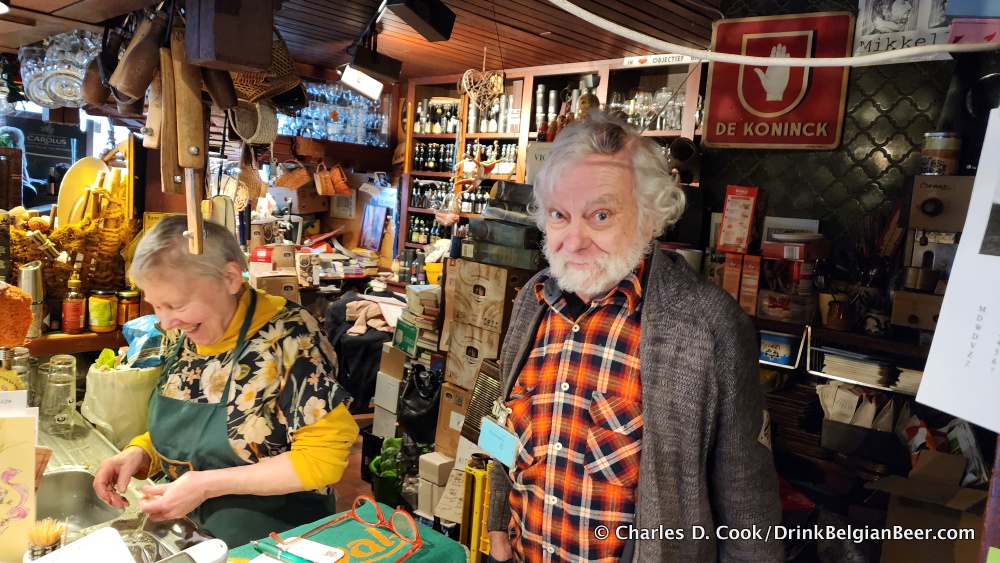
It was well known that Dirk has been in ill health for the last several years, and that was the major contributing factor to the closing. My sources tell me that the second reason, and the final straw that broke the camel’s back, was the mandatory imposition of the European Union’s new digital invoicing system, which went to effect in January 2026.
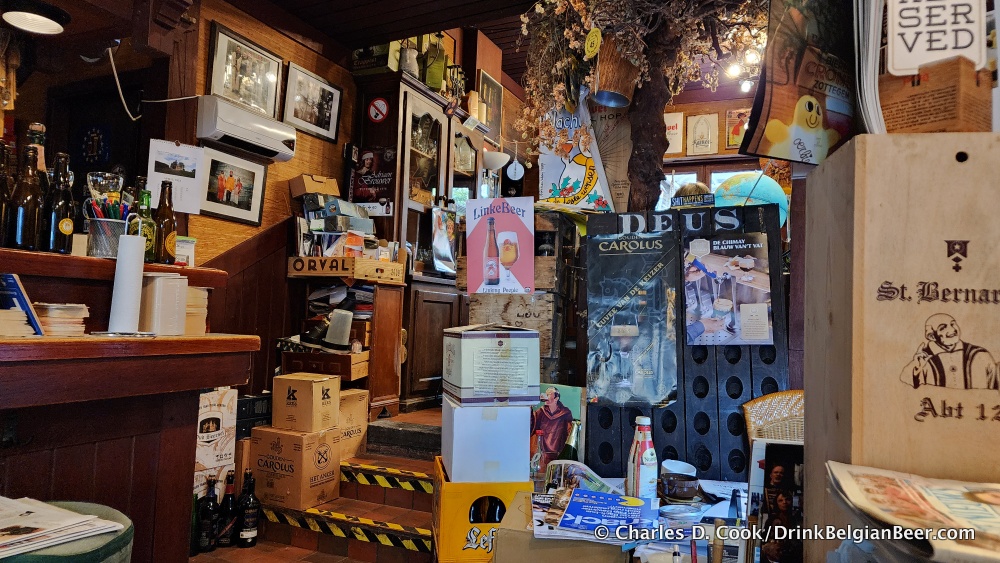
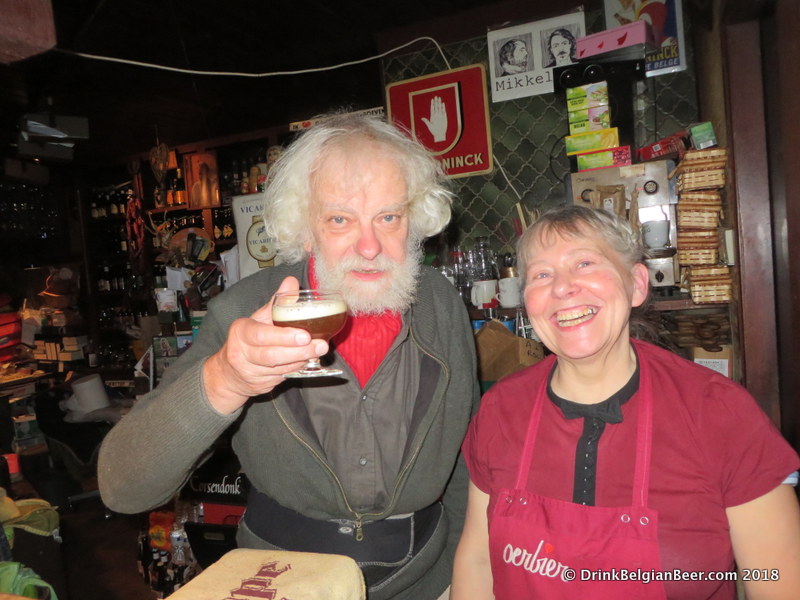
For a couple in their 70’s who never had any on-line social media whatsoever, let alone a website, dealing with new technology was not something that they liked or wanted to deal with. So they have shut down for good.
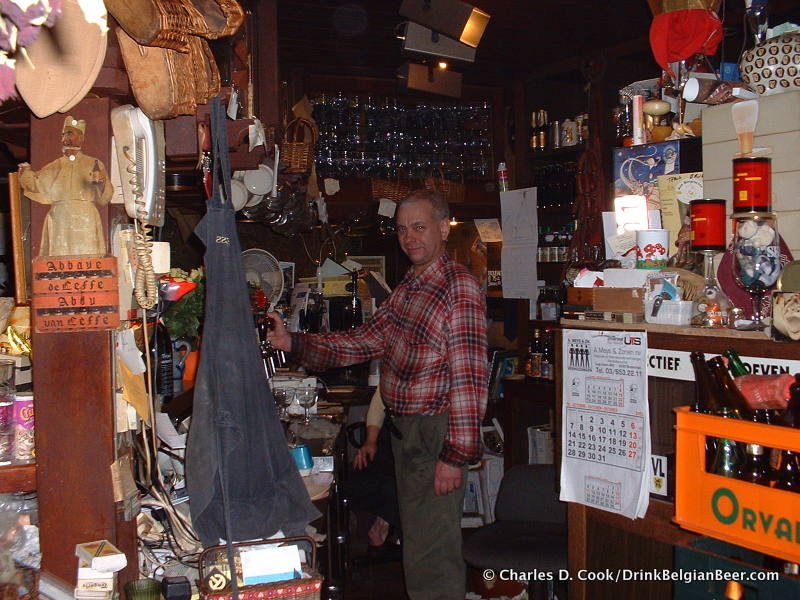
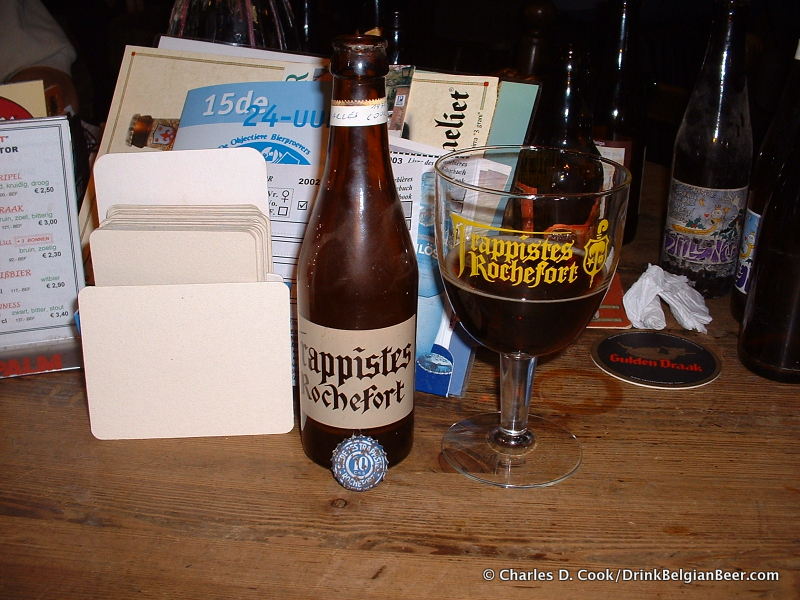
Let’s talk about the history of De Kulminator. You might ask: why open a bar that featured maturing and selling aged/vintage beers as one of its main specialties? For anyone new to the concept of aging/maturing beer, I should point out that the vast majority of beers should be enjoyed fresh. There are exceptions, including bottle-conditioned brews (which are filled with living yeast in the bottle, which continues to develop/mature the beer over time.) Bottling conditioning, referred to as refermentation in the bottle in Belgium, is common in lambic beers such a Geuze/Gueuze, Kriek, and Framboise, and their acidic character acts as a preservative as well. Additionally, strong beers, such as Trappist brews like Chimay Blue, Rochefort 6, 8 and 10, and Westvleteren 8 and 12, are also some of the best candidates for aging, as the high alcohol content is a preservative, and these beers are refermented in the bottle as well.
Filtered strong brews can also age well, again, due to their higher alcohol contents, as well as some beers with acidity, such as Brouwerij Rodenbach Vintage and Grand Cru.
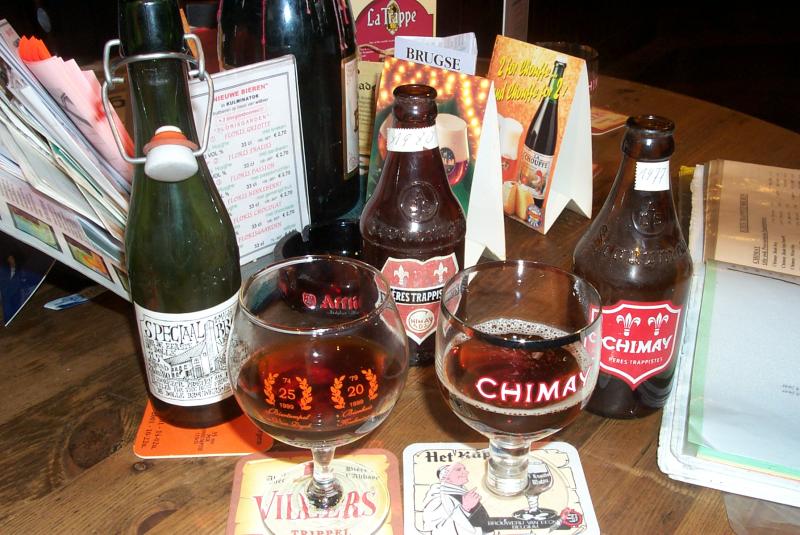
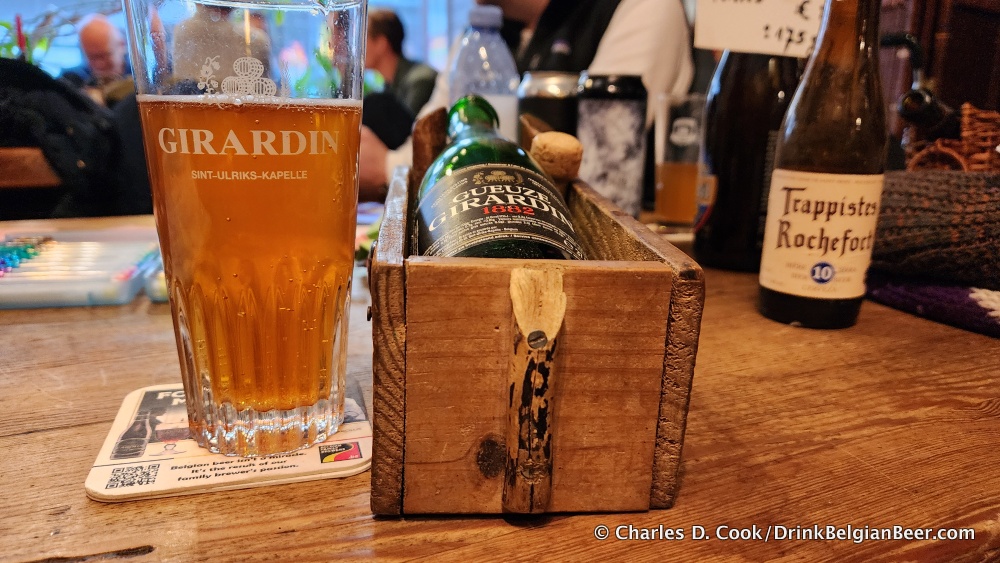
Note that Bierhuis Kulminator, which was located at Vleminckveld 32-34 in Antwerpen, not far from the city’s old center, was not the first specialty beer cafe run by Dirk and Leen. That was Cafe Bodega, aka “Biertempel Van Dyck” which was open from November 1974 to March 1979 in the suburb of Kiel, at Pierenbergstraat 17. More on that below.
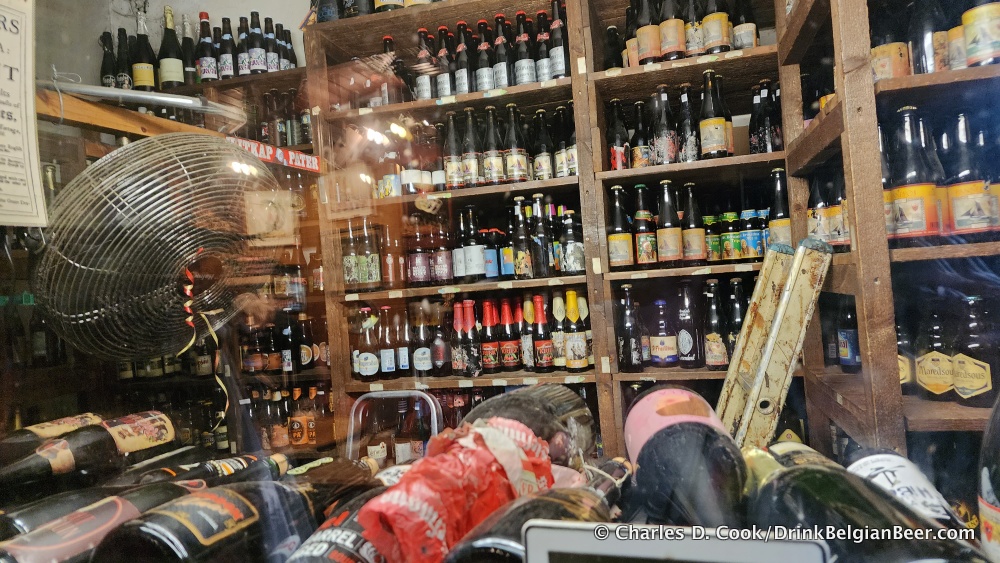
Kulminator was more than just a bar, it was an institution. It was kind of a combination of a local’s pub, that also had the biggest cellar of vintage/aged beers in the world. While beer lovers from all over the planet visited, there was always interested locals and regulars there as well.
I have written about Cafe Bodega and Bierhuis Kulminator in All About Beer Magazine, Ale Street News, Beeradvocate Magazine, Beer Connoisseur Magazine, Beers of the World Magazine, CAMRA What’s Brewing, and Celebrator Beer News.
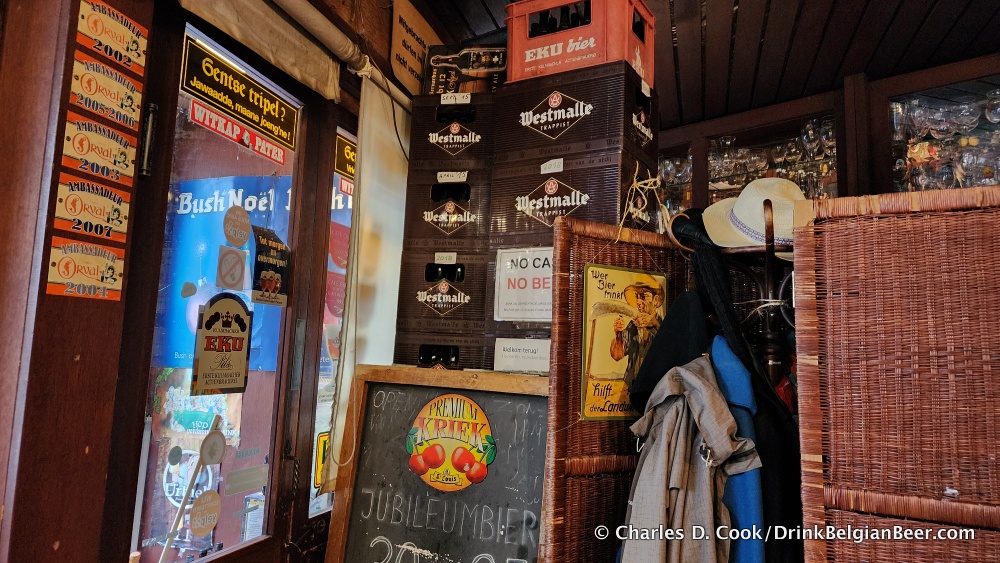
I first visited Bierhuis Kulminator in October 1996, and my last visit was in April 2024. Much had changed there since the early days. The opening days and hours for many years from when I first discovered the place were 8 pm to 11:30 pm on Mondays; 11 am to about midnight on Tuesdays through Fridays; and from 5 pm to midnight on Saturdays. One thing that never changed was Kulminator being closed on Sundays.
After the pandemic, the opening days and hours were much shortened, to Wednesday through Saturday from 11 am to 6 pm. They hours were shortened even more in the last couple of years.
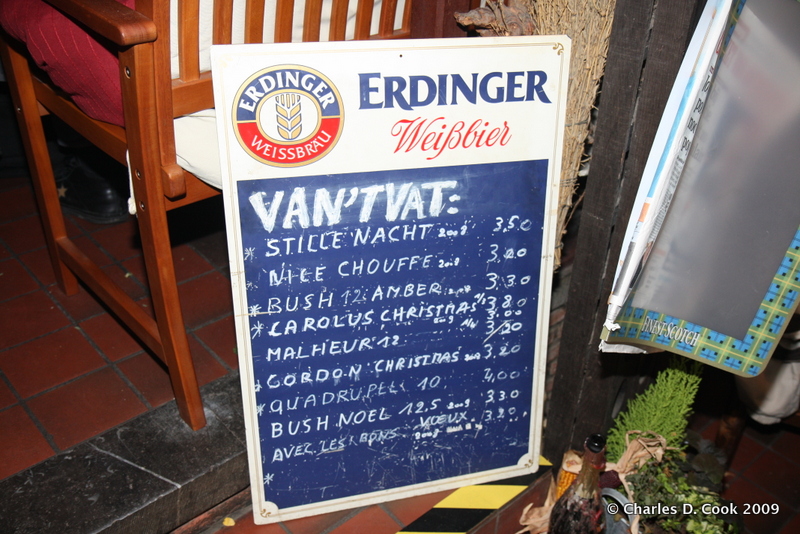
I arrived there many times at 11 am on a weekday, and was often the only person in the place for awhile. It was a great time to soak up the classical music that Kulminator was known for, and the slow pace of life there, and sample from a beer list that stretched into the hundreds. However, I should emphasize that the place was not only about aged brews. De Kulminator had nine beers on tap when I first visited in 1996, and that was eventually expanded to 12. There were even more when Dirk started bringing in bag in box lambics. All were craft brews, mostly from Belgium, but with some from Germany, and occasionally other countries. The best strategy was to order something from draft, while studying the phonebook-sized menu for a vintage beer to order.
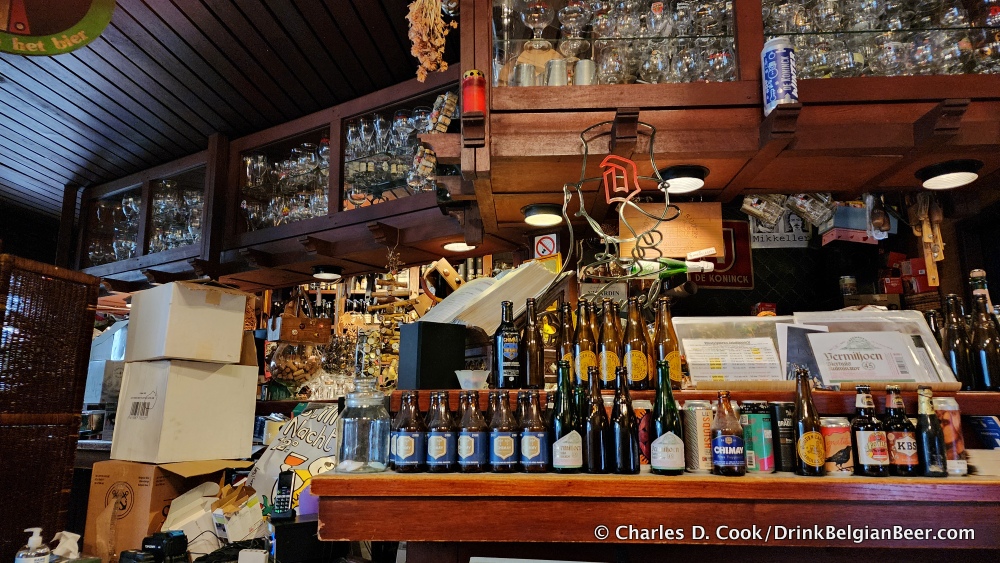
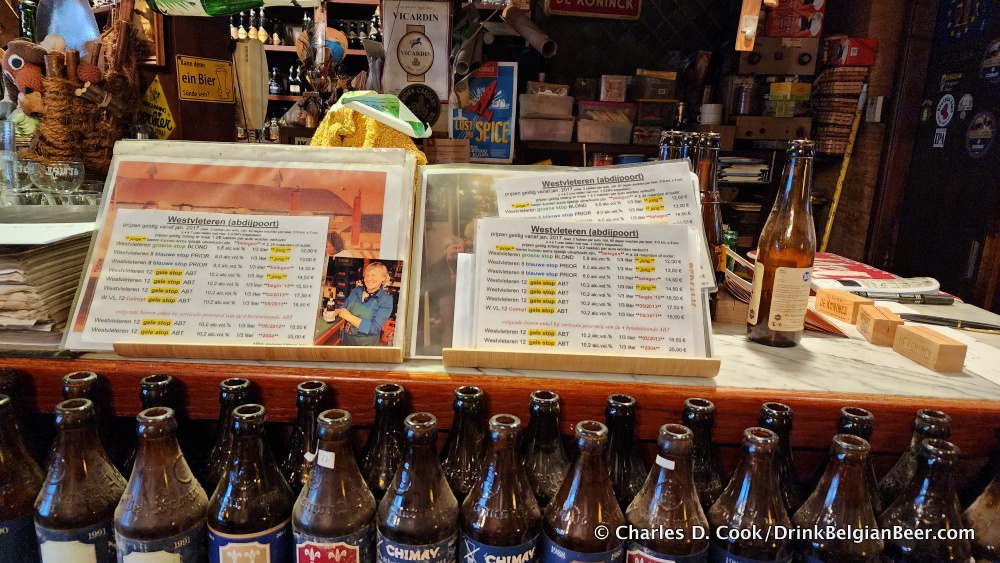
As time went on, and more and more beer lovers from around the world visited, Dirk and Leen made it clear that it was impolite to come in and only drink their aged beers. A good policy was to drink a beer on draft, and then something from the last few years, and then a vintage beer. Note that while Kulminator’s beers list ran to about 600 brews in the early’s 2000’s, they probably easily had over 1,000 plus different beers on hand by the time they closed.
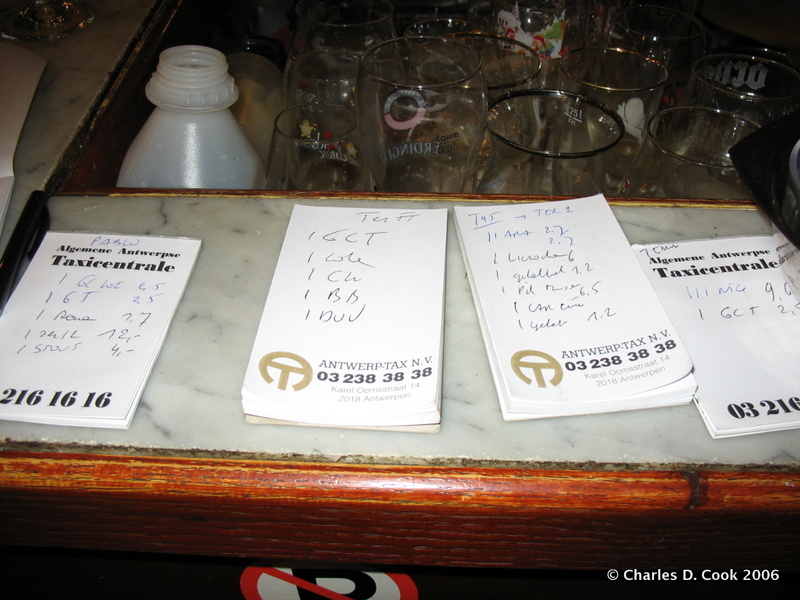
In fact, the first beer article I ever had published was about vintage beers: “The Art of Aging Gracefully: Vintage Beers at Belgium’s Beer Cafés” which was released on July 1, 2002 in All About Beer Magazine. I interviewed Dirk’s wife and co-owner Leen Boudewijn in December 2001, which led to the article, which was the first detailed story about the history of Kulminator that had ever been published in the English language.
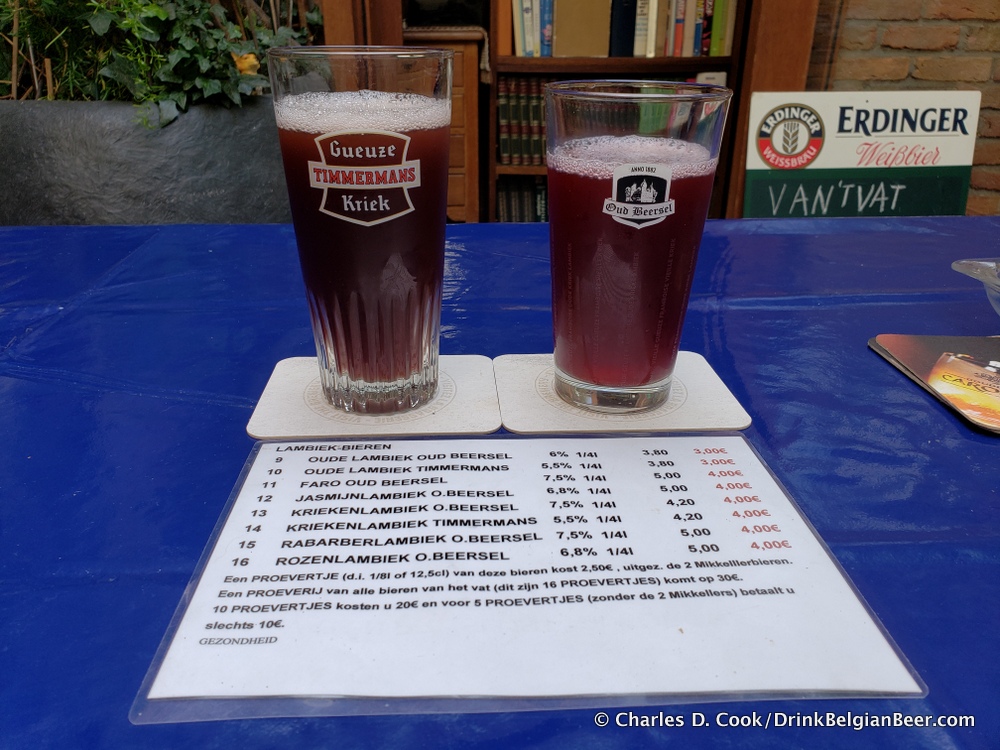
I learned in the interview that Dirk and Leen are from the Antwerp suburb of Mortsel, several kilometers to the south/southeast of the city center. They met while living in the same small town and liking the same sporting activities. Dirk studied medicine as a doctoral candidate, beginning in 1970, but even then he was drinking good Belgian beers and developing a taste for them. Dirk Van Dyck and Leen Boudewijn were married in 1973. They would open their own business the following year.
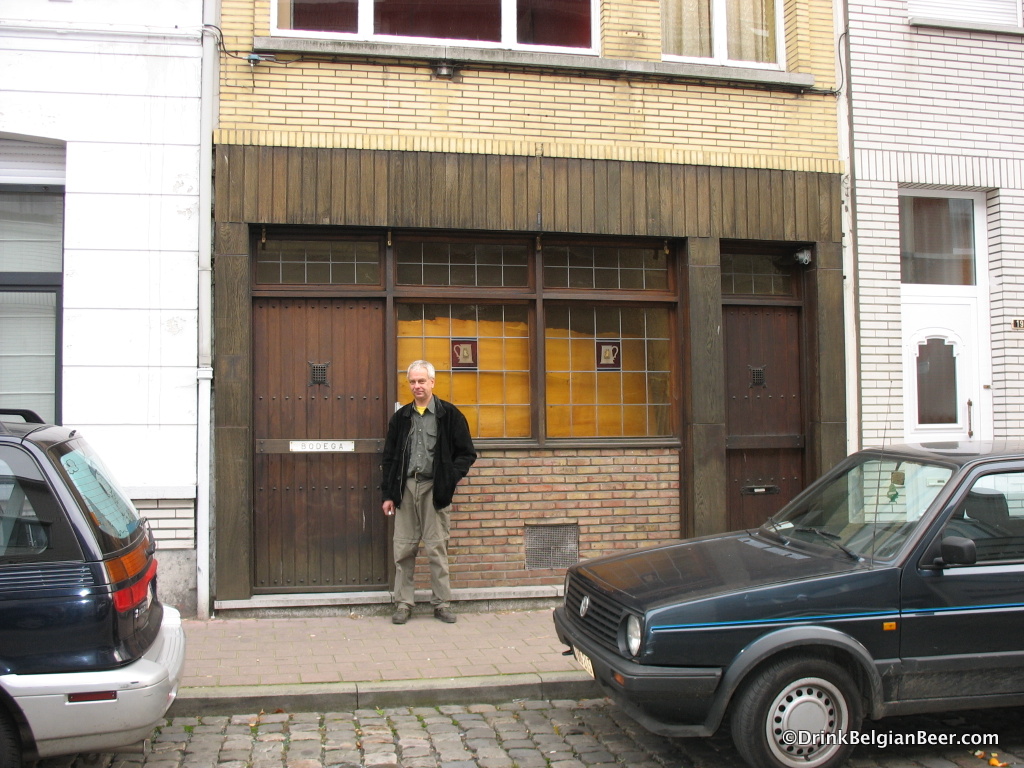
In order to understand the history of Bierhuis Kulminator, and how it developed as a great specialty beer cafe, it is helpful to know the history of Bodega.
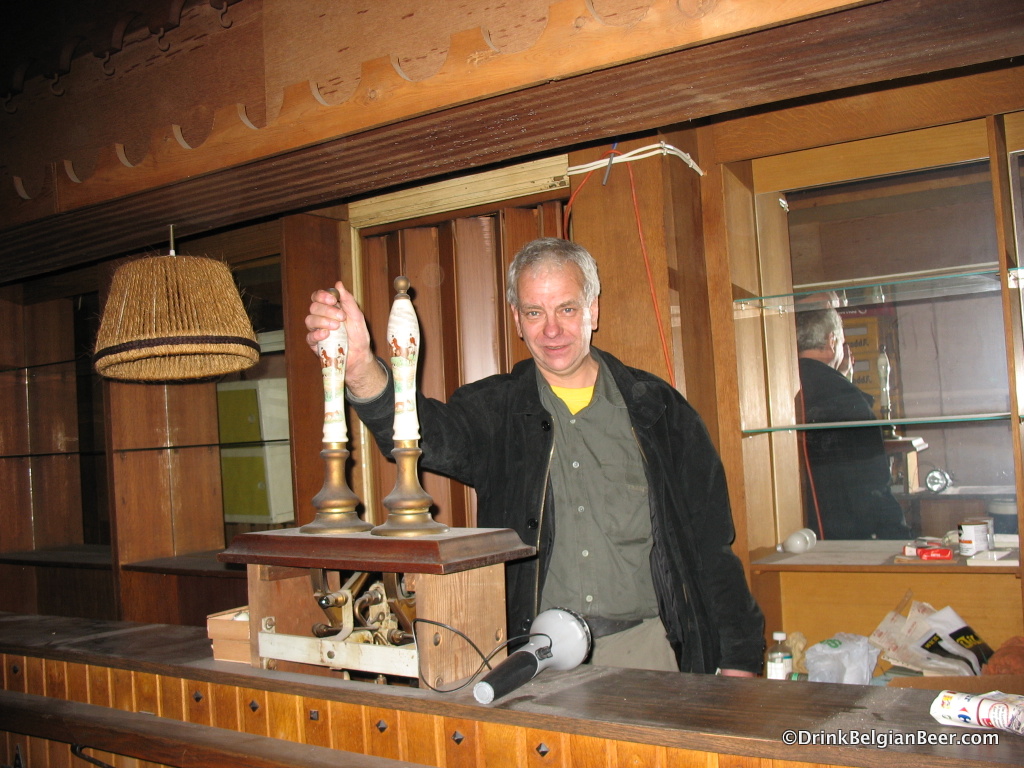
Leen told me about that cafe, and I asked her: why the name Bodega? I wondered, because Bodega is a term used more often for a place more often associated with wine than beer. “We opened Bodega as a wine bar,” Leen told me. “We wanted to have a successful wine pub, but the reaction of the local people was not so good to our new cafe. They were not very fond of wine. So, Dirk knew we had to change the focus of Bodega, and in December of 1974, we did, to that of a café specializing in offering many different beers.”
It was very lucky for the beer lovers of the world that wine was not popular in an Antwerp suburb in 1974!
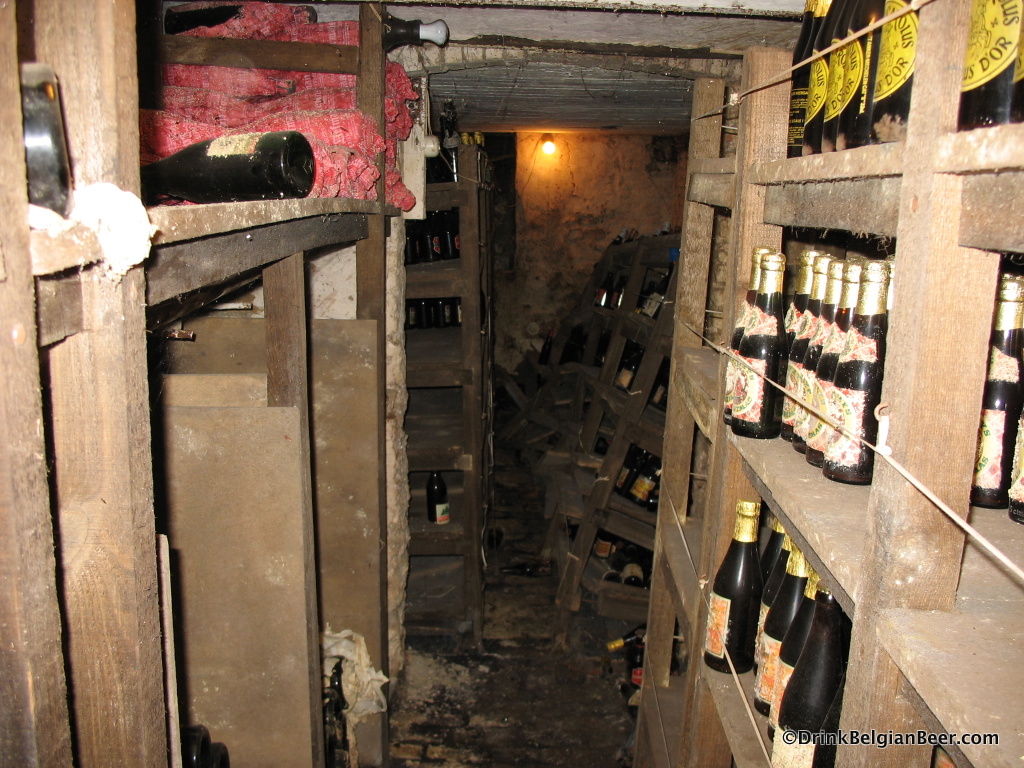
Bodega, sometimes referred to as “Biertempel Van Dyck”, was located five kilometers (3.1 miles) south of Antwerp, in Kiel. It offered not just local brews of the region, which was common at the time, but beers from all over Belgium, as well as other countries. There were Abbey and Trappist brews, Christmas beers, Geuze/Gueuze, Kriek, Oud Bruin, and Saisons from Belgium. From Germany, there were strong lagers like EKU 28, often called Kulminator 28, and other bocks like Weihenstephaner Korbinian. There were also Danish Porters, as well as the strongest Guinness Stout, called Special Export, which was brewed (and still is) for the Belgian and Dutch markets.
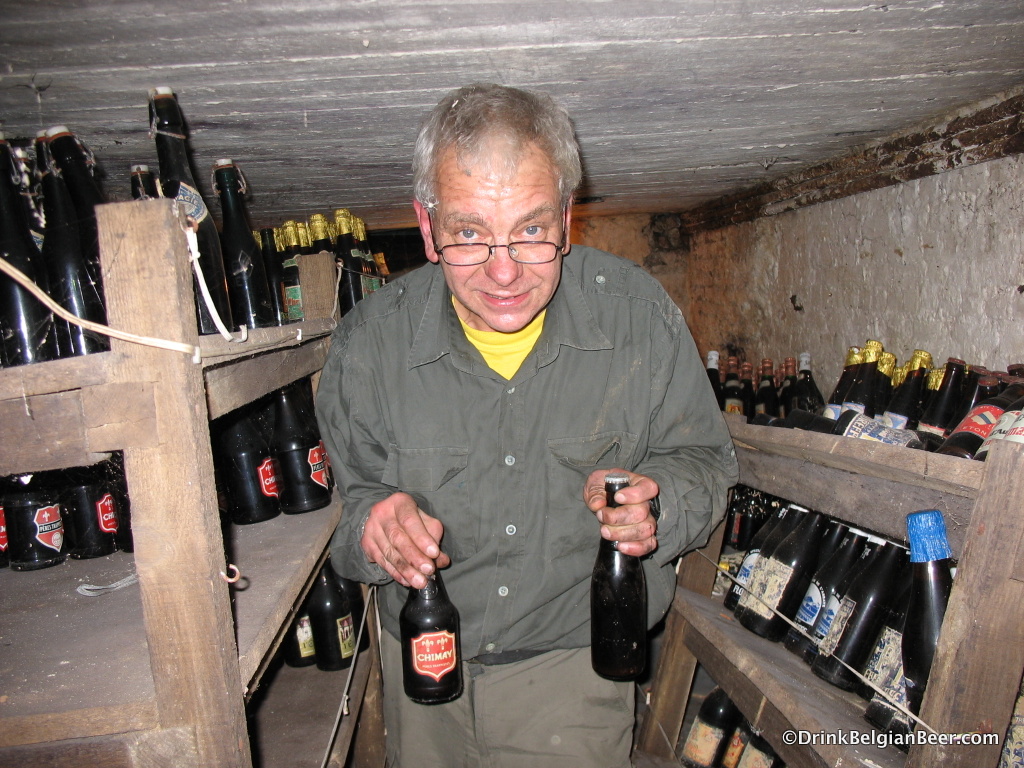
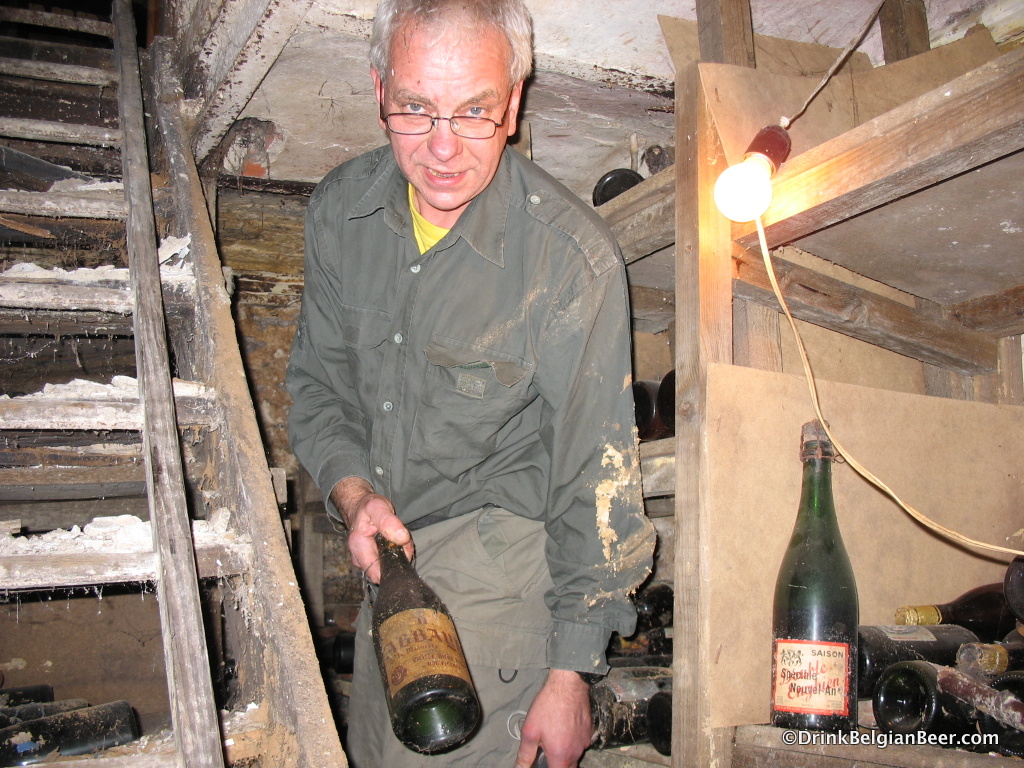
How did Dirk and Leen obtain all these special brews in the days when most beers in Belgium stayed local? “Thursday was the closing day for Bodega. On that day, we drove to breweries around Belgium, and tasted beers. The ones we liked, we would buy a few crates of, along with the glassware that went with the beer, to bring back and sell at Bodega,” Leen told me.
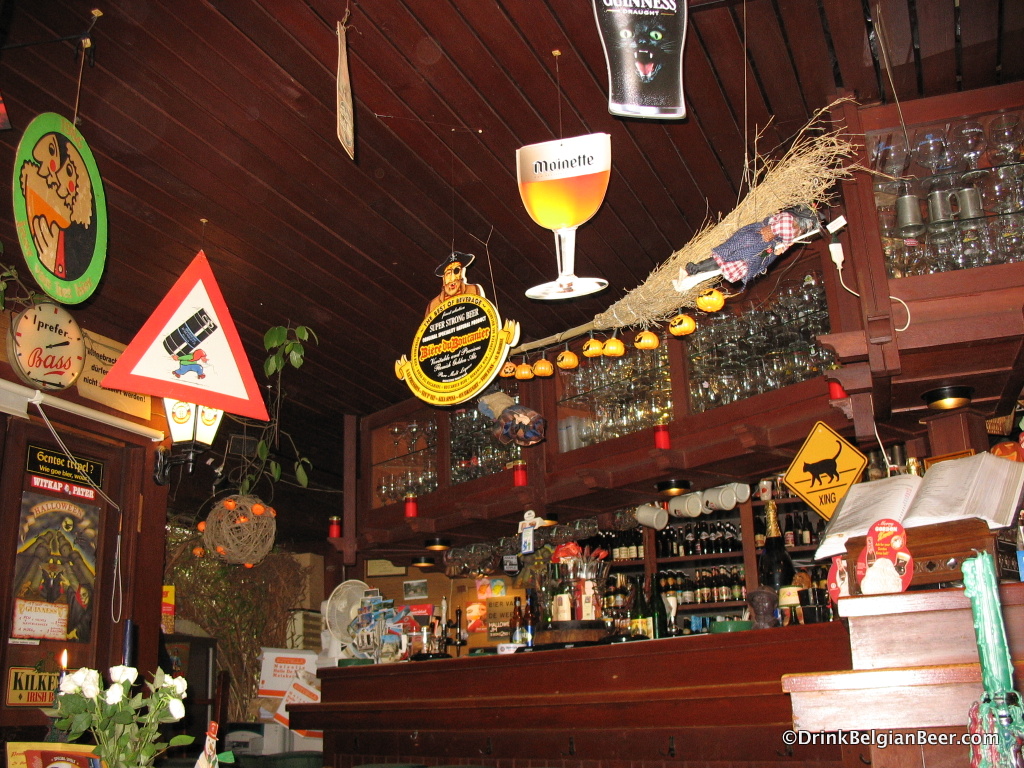
The bar at the Kulminator has display cases purpose built on top of it, as well as the display case near the stairs, housed many of these old glasses. Anyone who visited might have noticed the extensive amount of old and new breweriana, and the glassware was a big part of that.
There was also a business relationship with a local bottle shop, called “Boemelaar.” Dirk and Leen purchased beers for re-sale from this shop. Boemelaar is an affectionate Flemish term for a man who enjoys drinking, as the owner of that shop apparently did! The name of his shop and his nickname were the same.
Dirk took me on a tour of the Bodega cafe and its cellar on October 28, 2005.
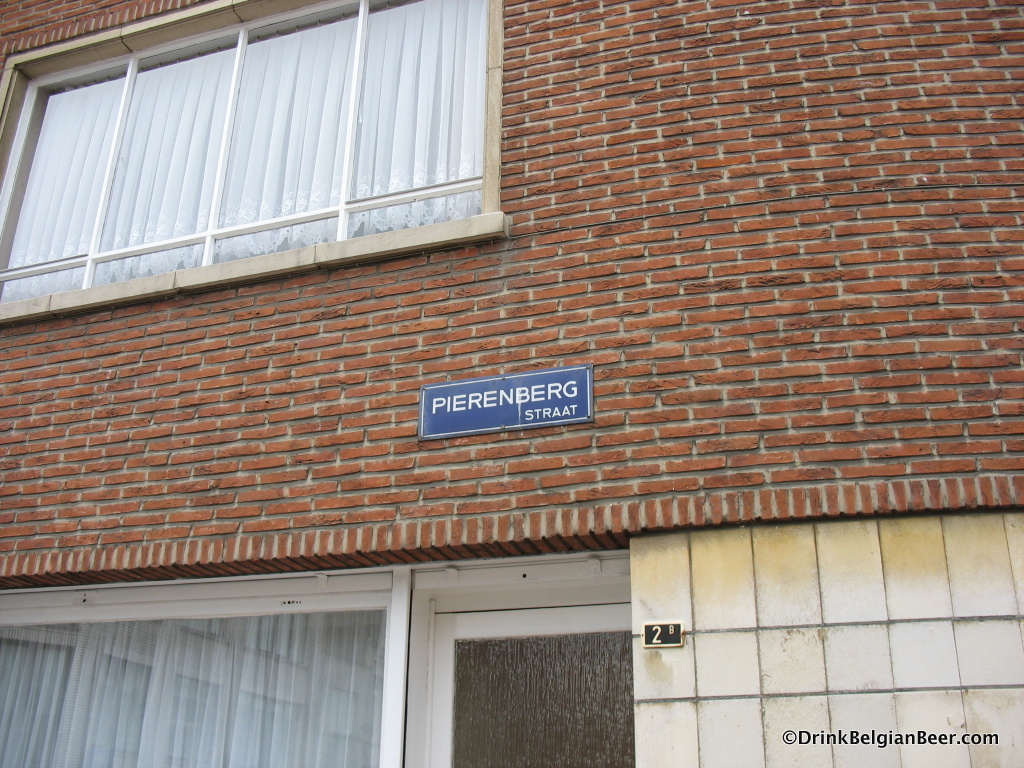
Reminiscing about the cafe’s history, Dirk told me before entering: “This is where the Belgian beer culture began, in 1974.” He also pointed out a street sign where Bodega is located: Pierenbergstraat, number 17. “I often thought about changing the “P” to a “B”, so it would be Bierenbergstraat!” he said, jokingly.
I noticed the cross street nearest “Biertempel van Dyck”: Abdijstraat. Yes, Abbey street. Dirk mentioned there used to be an ‘Abbey’ brewery nearby. The monks and Abbey were long gone, but secular brewers used the name. The brewery closed in 1950. “When I was young, I did not think of coincidences like that. But now, I think about the irony of it, about all the Abbey and Trappist beers I served at Bodega,” Dirk said, retrospectively.
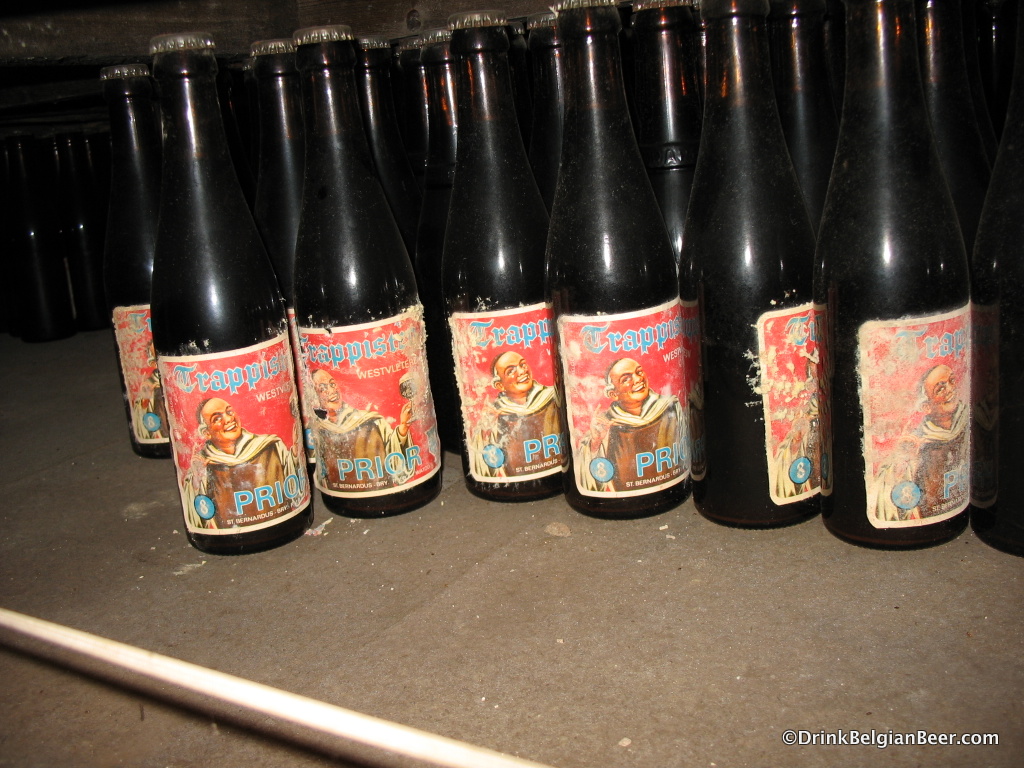
The public area of Bodega was not a big place. Perhaps a dozen people could sit at the bar, and ten to twenty more, standing. The beer specialist café concept worked very well, as it was not as easy as it is today to find special beers outside of their local regions. Dirk and Leen would have beers available that often would not be seen outside of the small towns where they were brewed and could serve them in their correct glassware to boot. Bodega was Antwerp’s first such café.
Size and location would be its eventual undoing: business was so good that, after a few years, Dirk and Leen decided they needed to expand.
A classic cellar…full of aged treasures
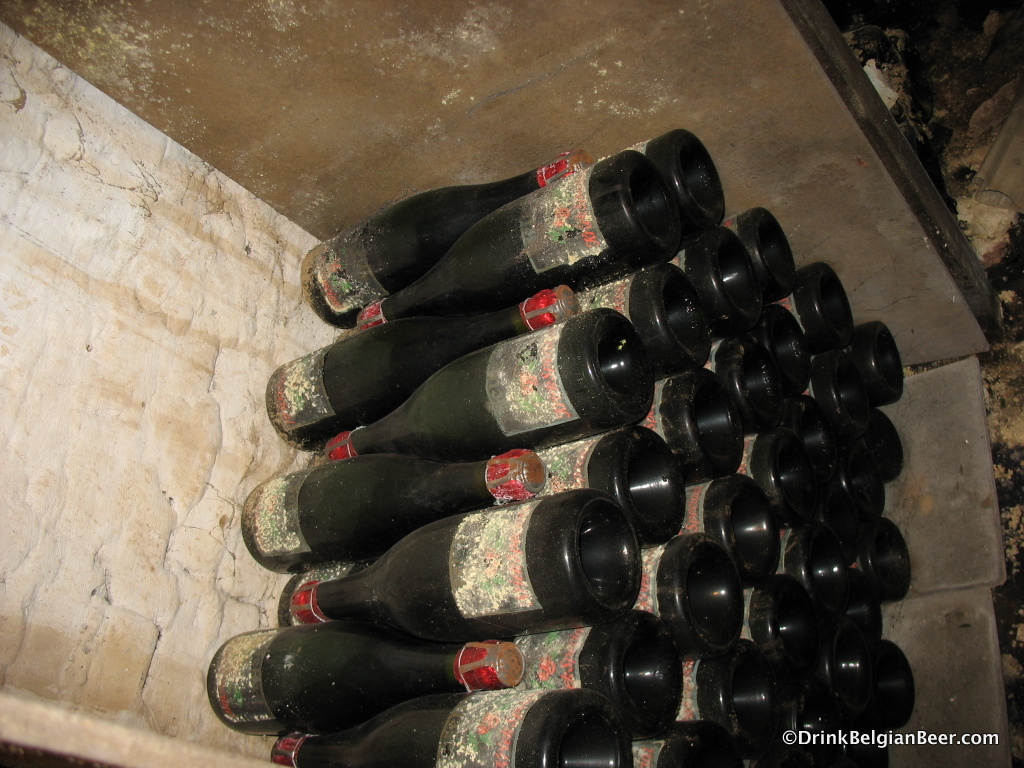
Our visit to the Bodega cellar was a real delight: there were still about 500 cases of beer there, all dating to 1974-79! Dirk and Leen got the idea for aging beers when they visited the Trappist Abbaye Notre Dame de Scourmont (Chimay) in 1974 or 1975. Father Noel let them taste a Chimay Blue, which was about ten years old. They were very impressed with the beer’s flavor, and decided to experiment with aging various brews themselves.
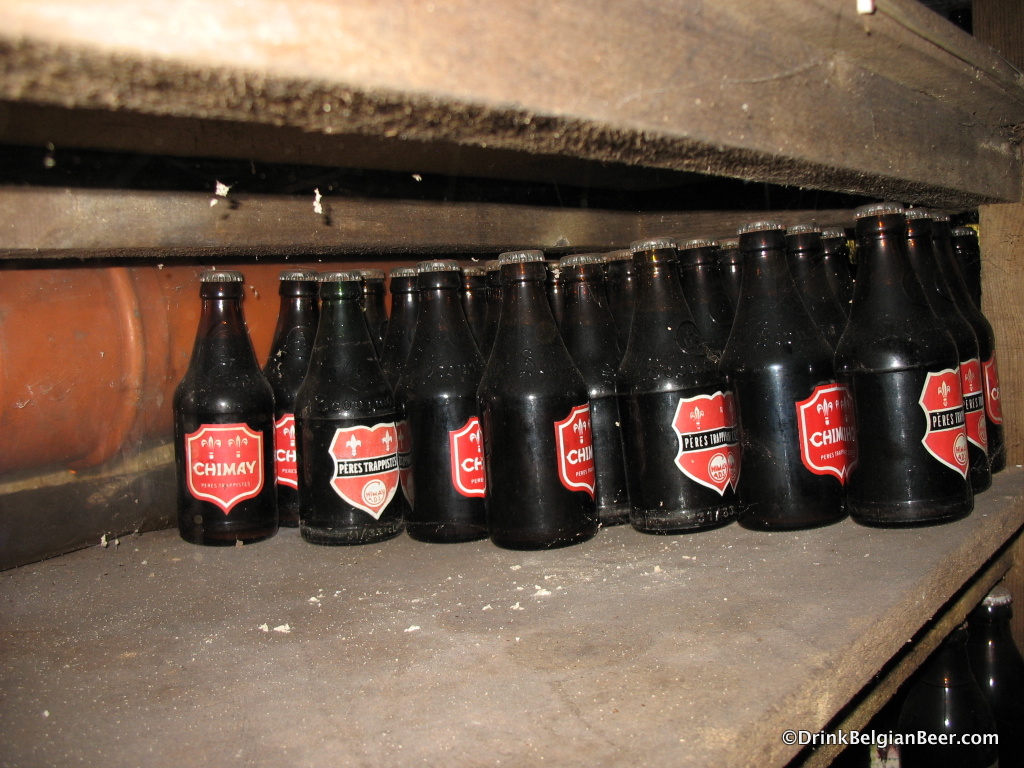
So, a 1965 Chimay Blue was one of the catalysts for what would become 51 plus years of delighting beer lovers from Belgium and around the globe.
The cellar of the Bodega café was the perfect locale for maturing/aging beer, as it could accommodate about 1,000 cases of beer when full. Even so, it is a fairly small place.
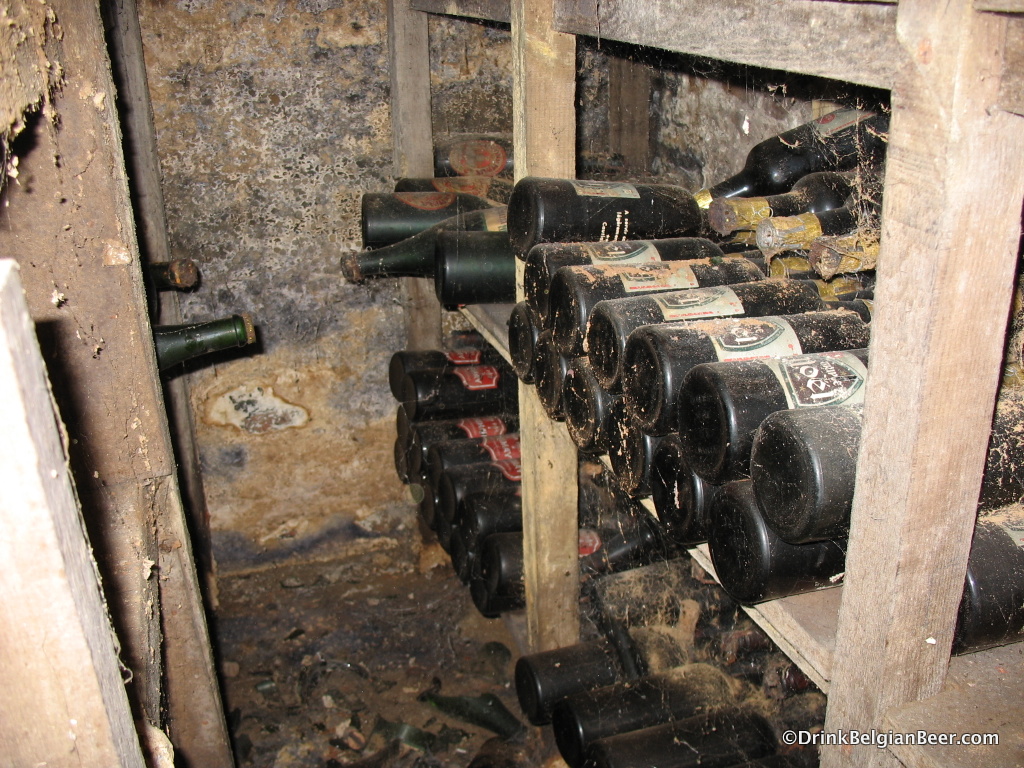
Dirk estimated cellar temps to vary between 50 and 60 degrees Fahrenheit, depending on the time of year. This was nearly ideal storage conditions for aging beer.
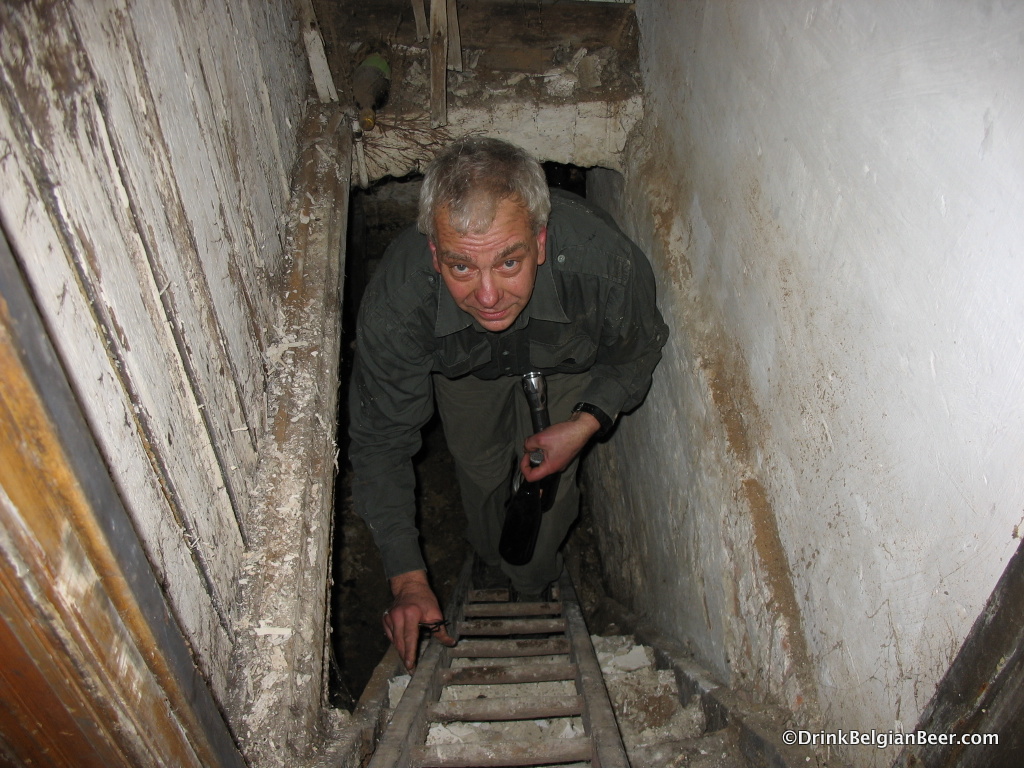
All of the vintage beers in the Bodega cellar were moved to the new, third cellar at the Kulminator in late 2005. Dirk and Leen had been renting Bodega as a storage space since they closed the cafe in 1979. The owners sold the building in 2005, so everything had to be moved out by the end of December of that year.
There were no other press visits to the Bodega cellar, ever, except for a Flemish TV news crew that toured it in 1976. “After that, the cellar was off limits to anyone but me, and the gas meter reader, who came once every two years!” Dirk remarked during our visit.
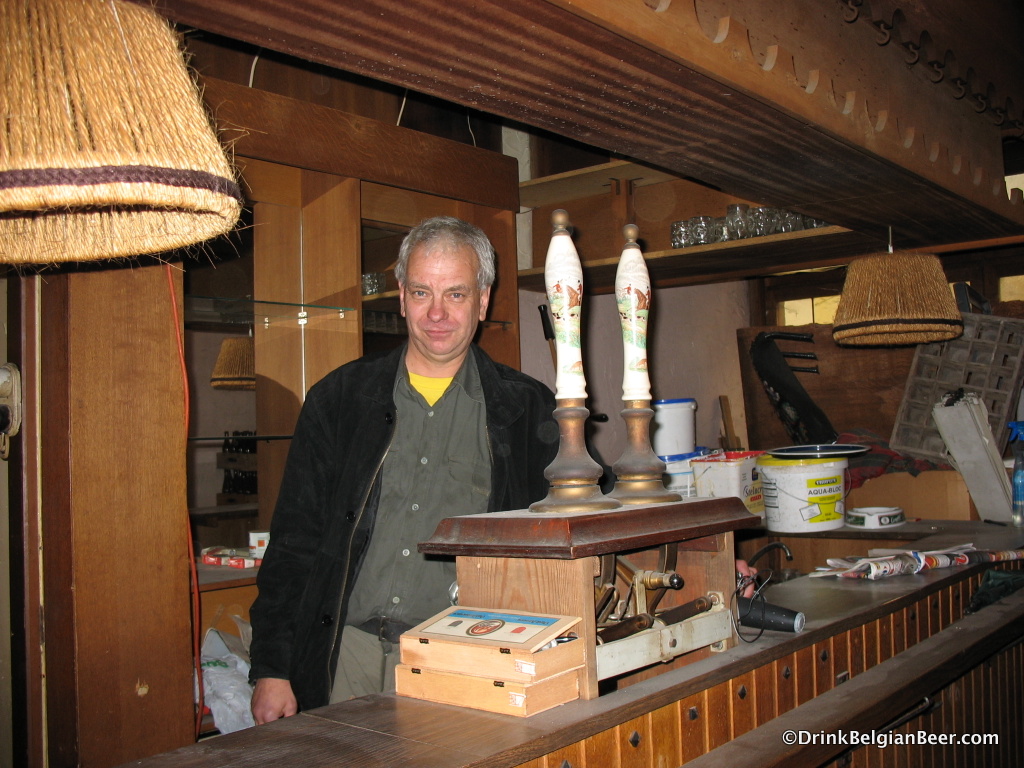
Perhaps the most important and lasting legacy of the Bodega cafe is the concept of the specialty beer bar: a place where dedicated owners offer their patrons a selection of many different beers to choose from, served in special glassware. A place where specialty brews are given the respect and reverence they deserve. A place where beer lovers can return again and again and always taste something new. A place where like-minded people can meet and taste brews they had never heard of, and share in the camaraderie which bonds the aficionados of fine beers together. These concepts were continued at Bierhuis Kulminator.
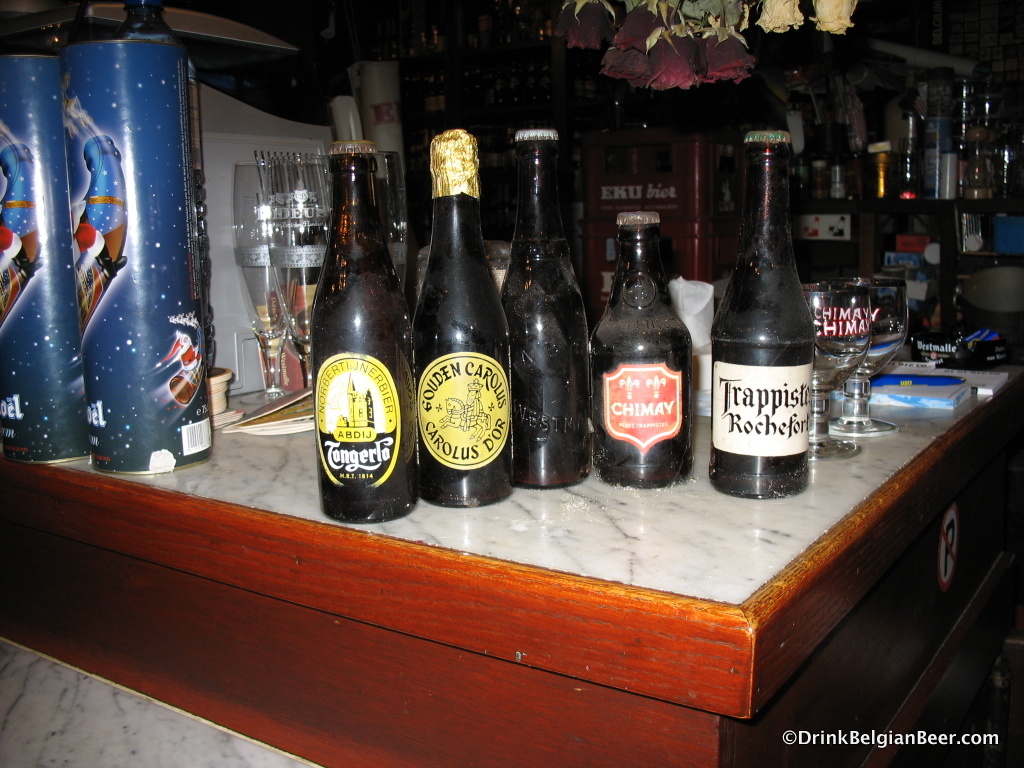
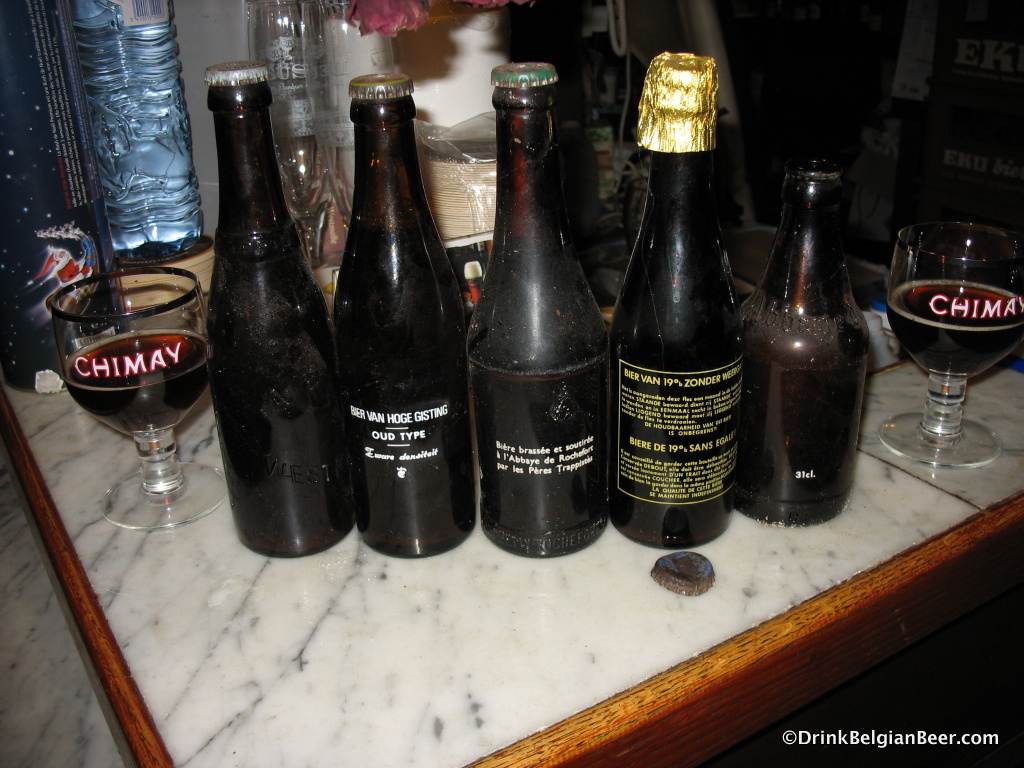
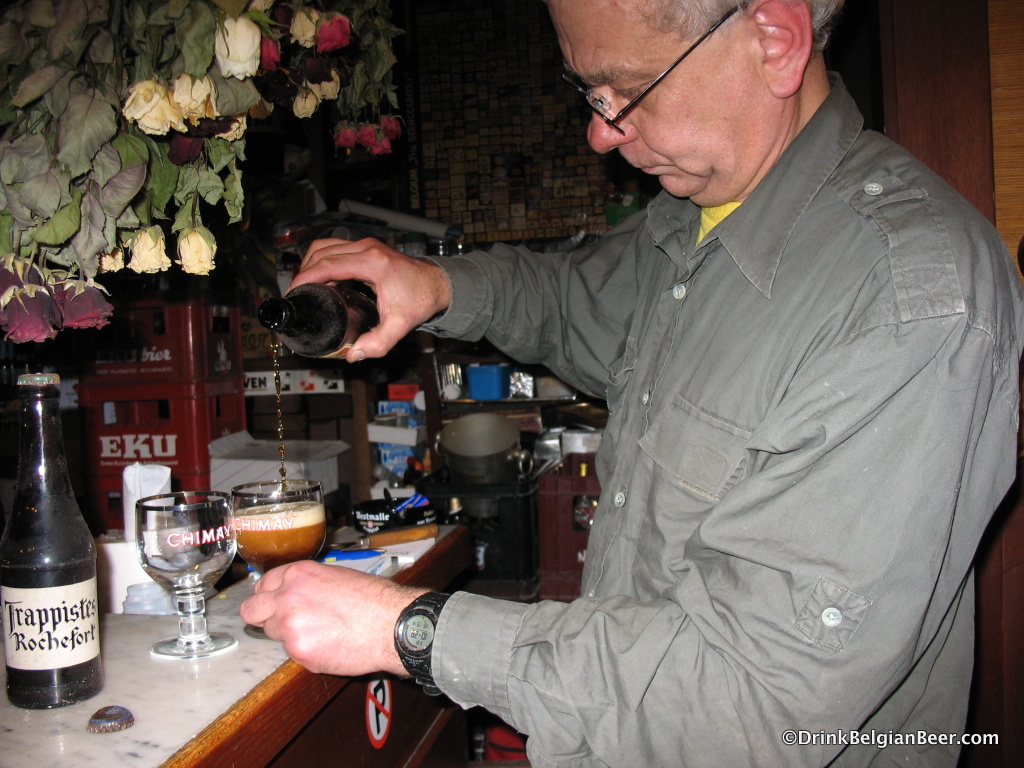
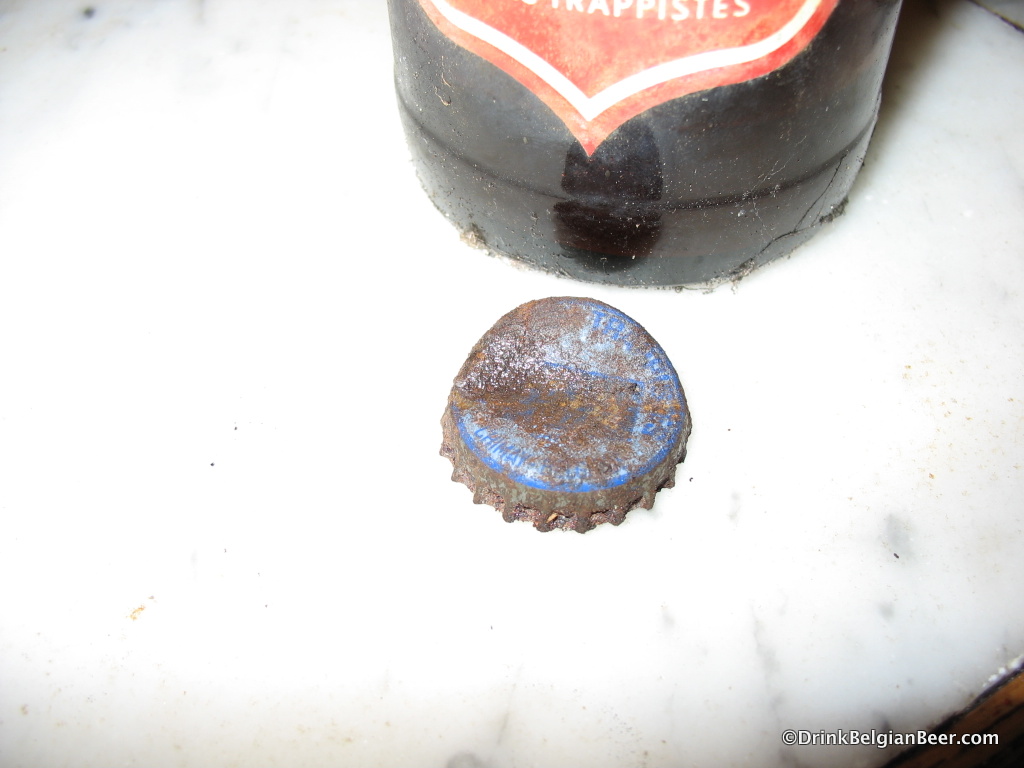
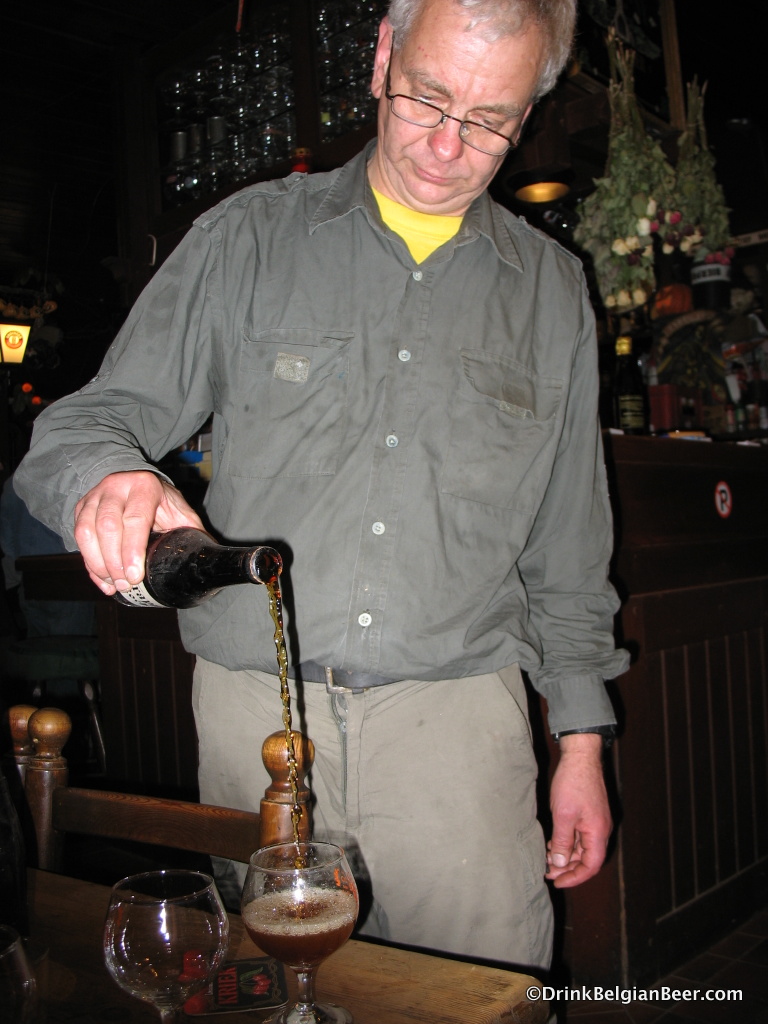
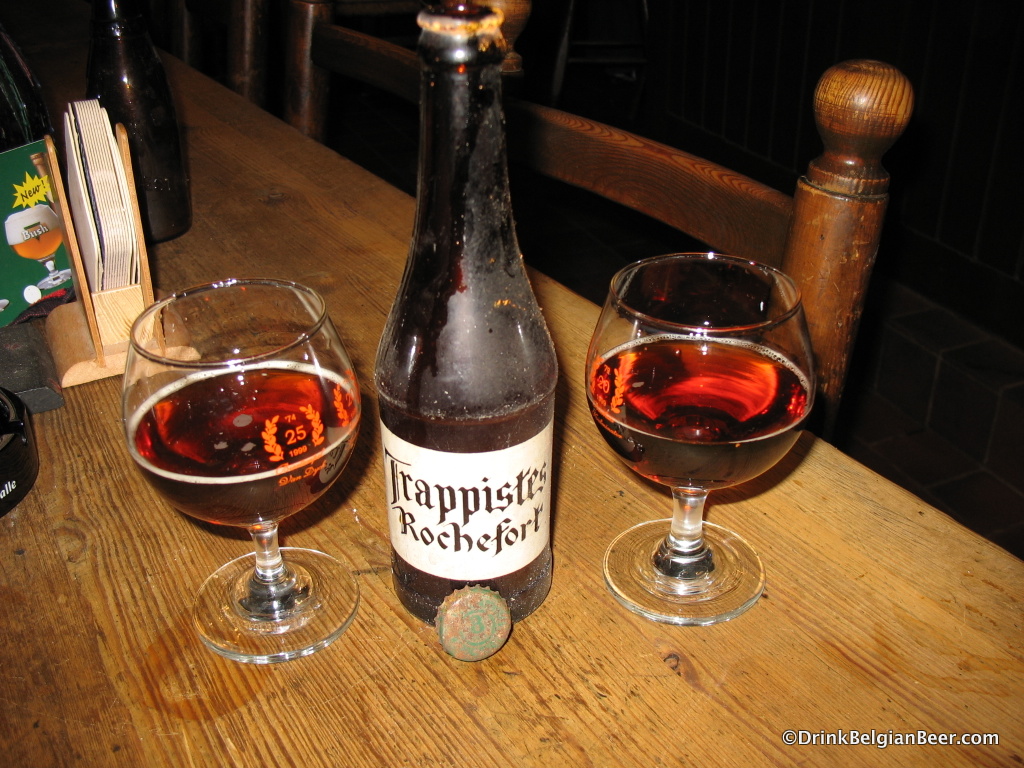
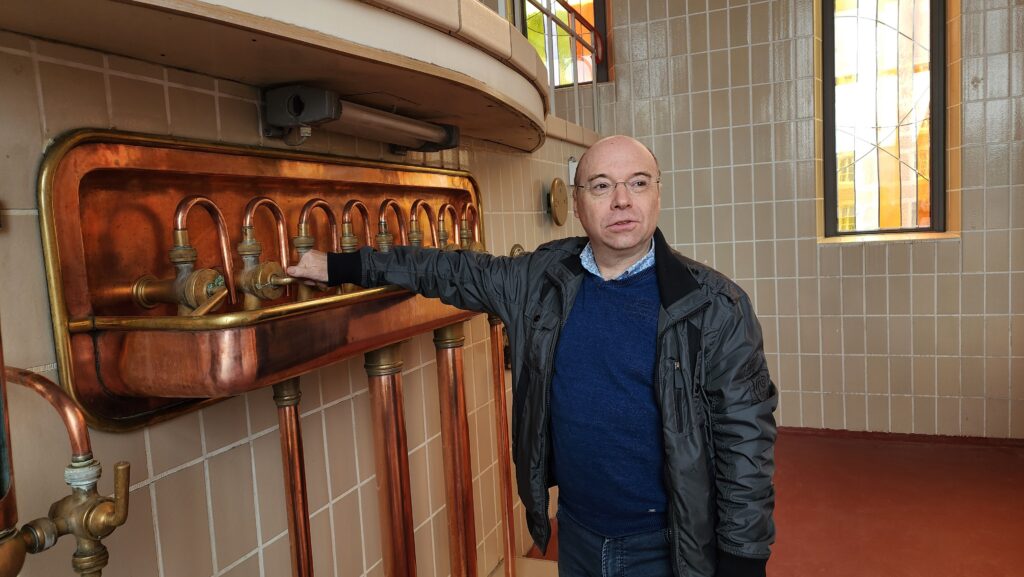
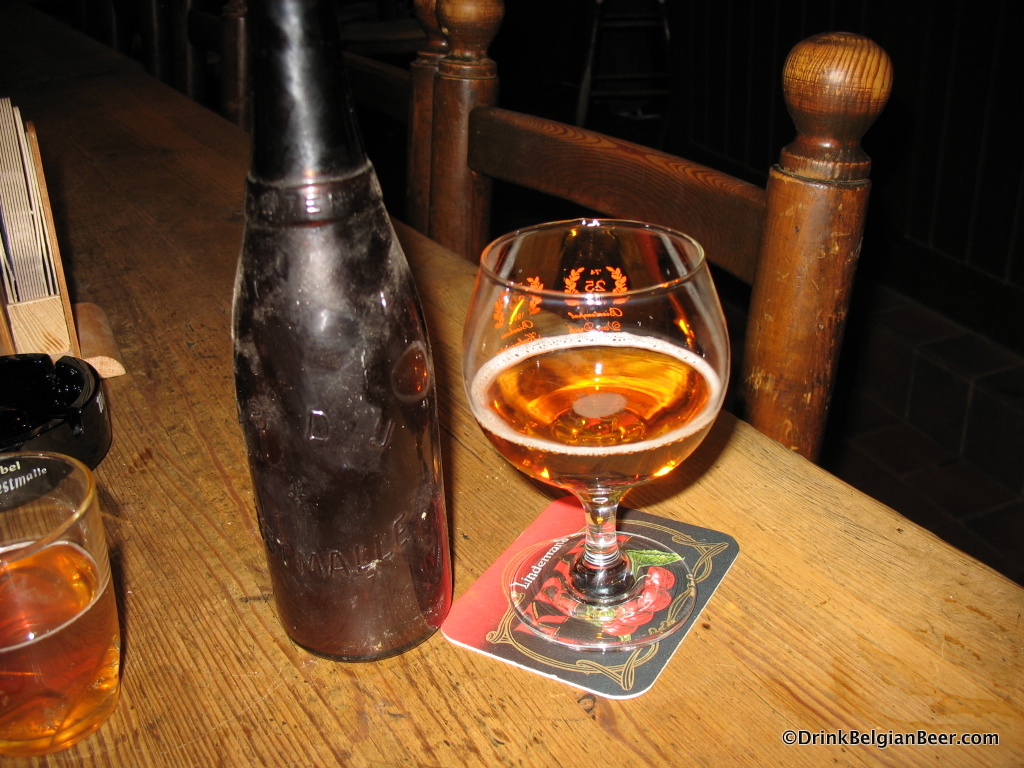
Dirk found the current site of the Kulminator, which is close to Antwerp’s old center, in March 1978. The Kulminator is bigger inside, and had two large cellars at the time (now three) and also much more storage space. There was a transition period of about a year when Dirk and Leen worked on getting the new cafe ready, and then Bodega was closed.
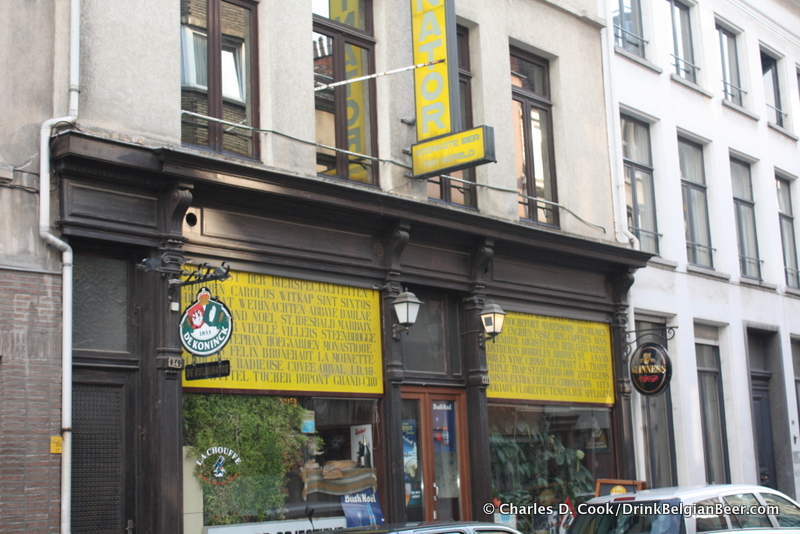
Dirk did not want just to move to the new site: he also wanted to have a new draw to go with the specialist café theme. He had tasted EKU 28 from Bavaria –also known as Kulminator (the brewery was called Erste Kulmbacher Actienbraureri) and liked it. He decided he would like to sell the beer in his new café and went to the brewery to offer a deal to the German owners. He was successful and was the sole importer of EKU 28 in Belgium for ten years, from 1979 to 1989.
The café was named for both the EKU 28 beer and also as a place where one could experience the culmination of the brewing arts and beer presentation at its highest form.
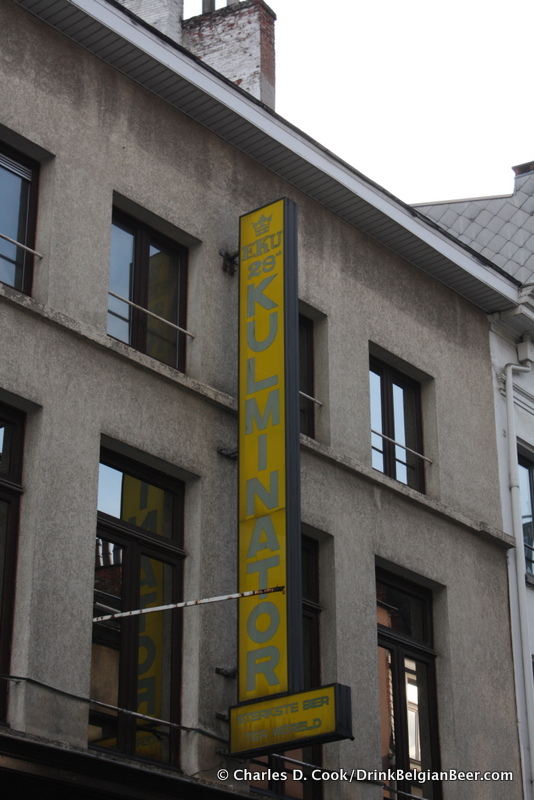
Dirk’s idea to both sell the EKU 28 beer and also to use the name Kulminator for his new beer café worked fabulously well. The name raised the curiosity of the locals about the place and they came to drink there. Dirk told me “I sold millions and millions of the EKU 28 beers in my café.” From 1979 to about 1985, Leen said “Everyone in Antwerp came here to drink the EKU beer.” In 1985, she continued, “the Antwerpers left the Kulminator to the tourists.”
The Founding of the Objectieve Bierproevers: promoting Belgium’s beer culture.
Dirk’s good friend Peter Crombecq was an early promoter and researcher of Belgium’s many incredible beer styles and rich beer culture. In 1983, Peter and Dirk first discussed the idea of a Belgian beer society, similar to The Campaign for Real Ale (CAMRA) in Britain.
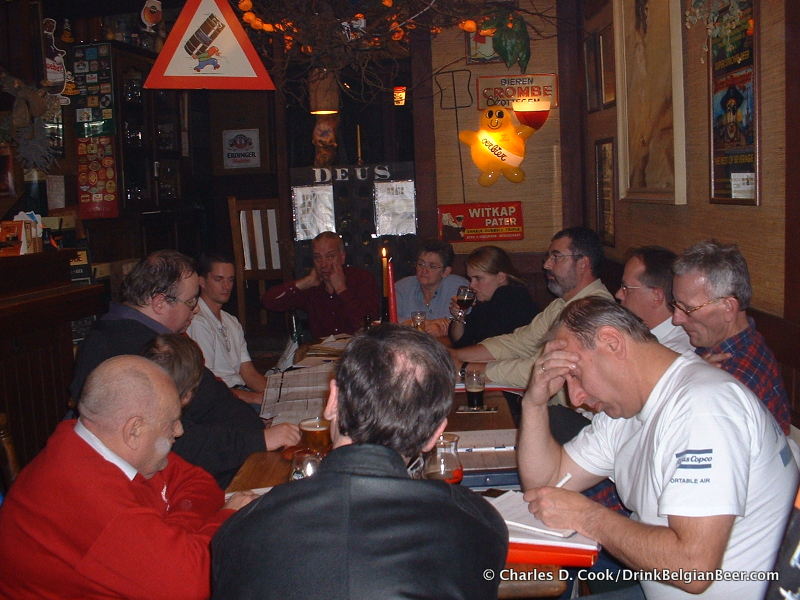
The first Objectieve Bierproevers (OBP) meeting was held at the Kulminator in December 1984, with 40 to 45 people attending. They organized a beer festival, held in early 1985, at the Frank Boon brewery in Lembeek. Each year, the festival continued to grow until it moved to Antwerp’s Stadfeestzaal, at Meir 76, in 1988, the first “24 Hours” beer festival. The festival was last in held in 2002, as the OBP had to be disbanded after that due to new Belgian laws regarding how non-profit organizations were formed.
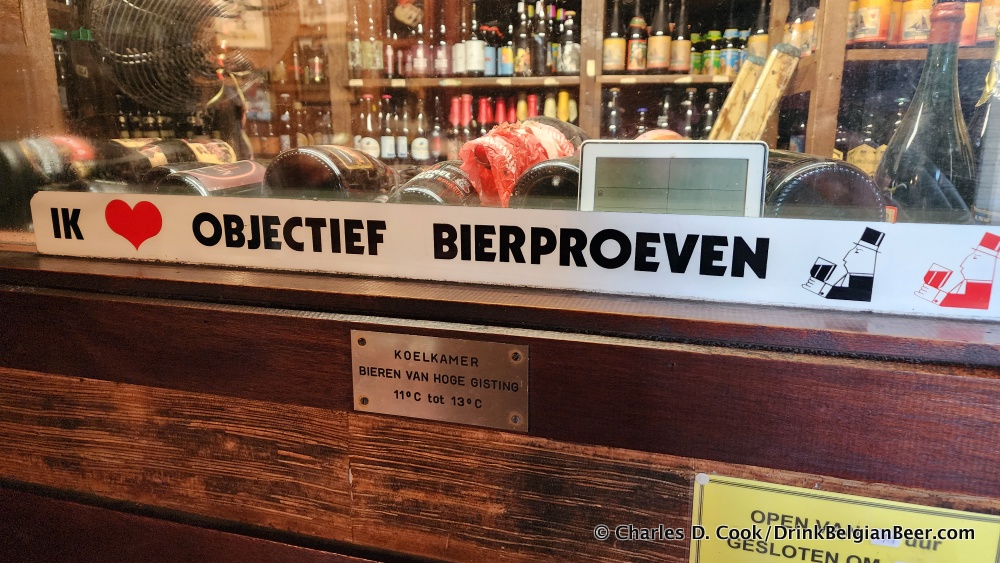
The Objectieve Bierproevers were a predecessor to Zythos, which organized very successful yearly beer festivals, called Zythos Beer Fest, in places such as Sint-Niklaas, and later in Leuven at the massive Brabanthal, for a number of years. The festivals held in Leuven featured over 500 Belgian brews during its last few years.
I mention the above because it shows the pivotal role Kulminator played in helping promote and grow Belgium’s beer culture in the early days of the 1980’s and 1990’s.
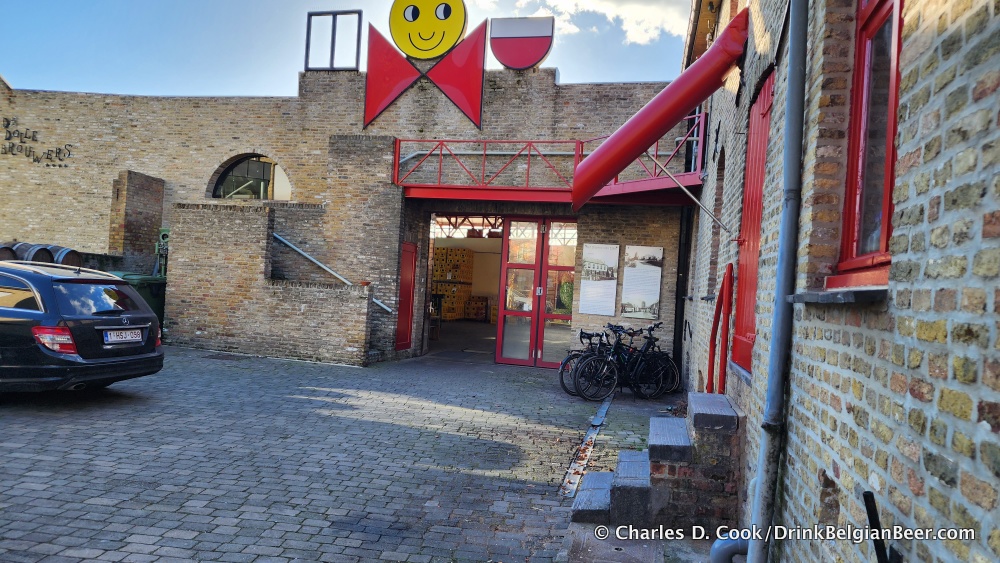
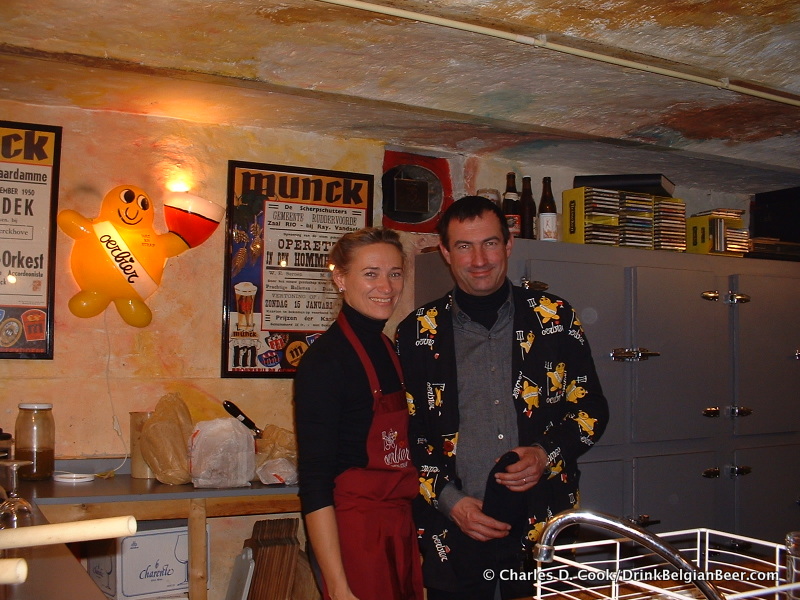
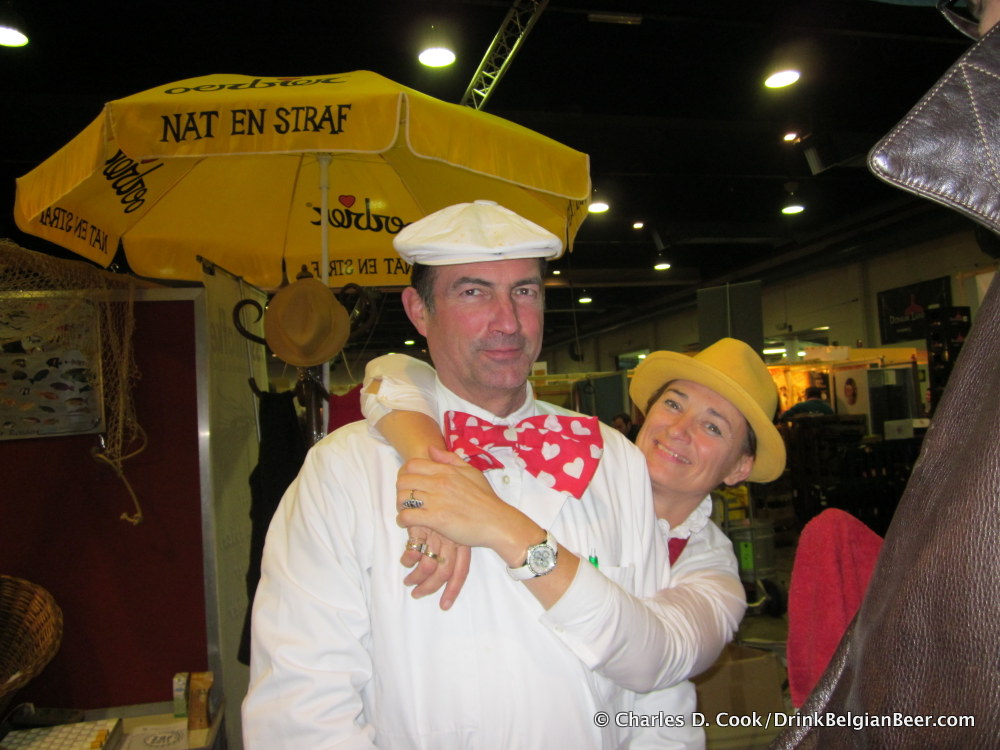
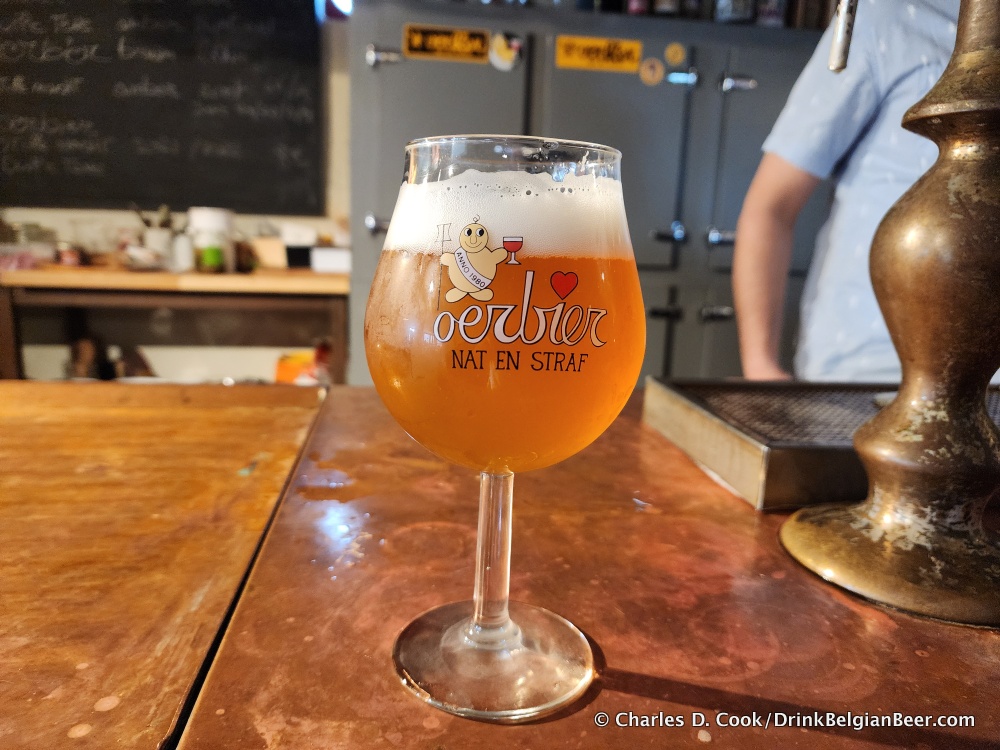
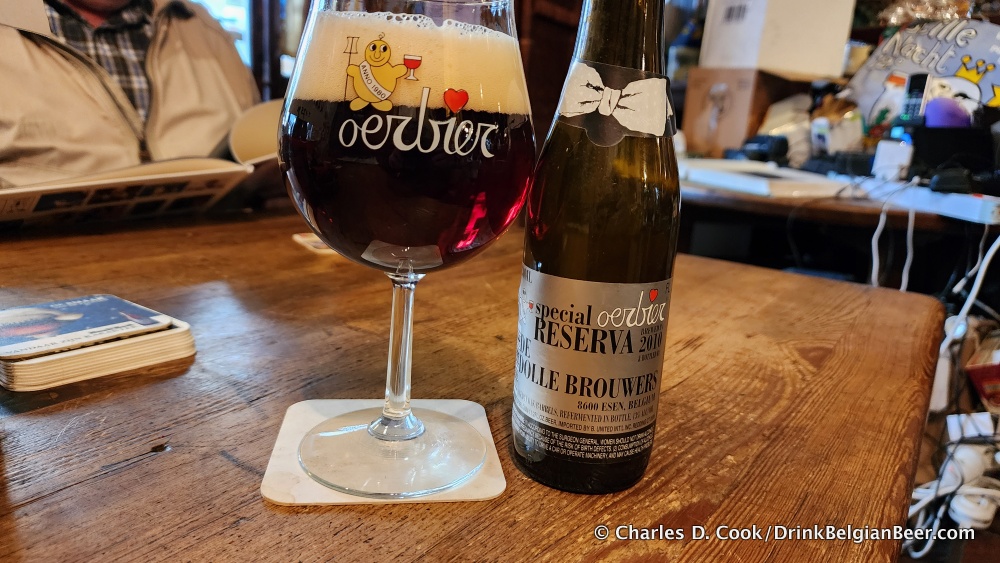
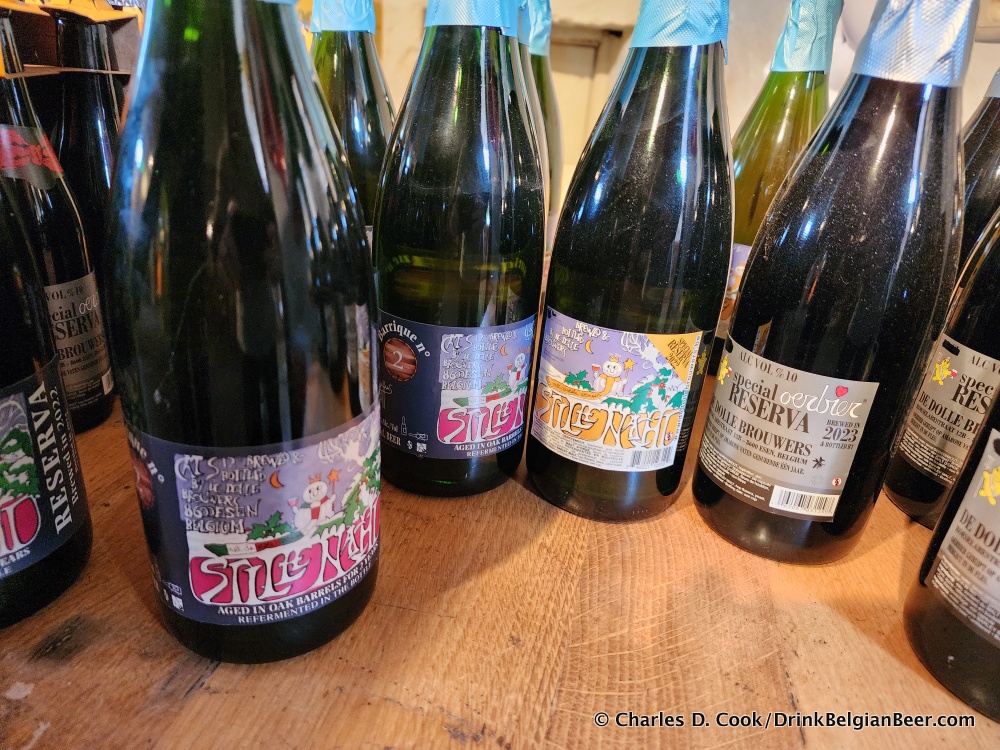
De Kulminator had a special relationship with De Dolle Brouwers, and stocked their brews from the early 1980’s until the day the bar closed. Dirk and Leen have been friends with husband and wife team Kris and Els Herteleer of De Dolle since those early days. Kris is the brewer at De Dolle, and his wife Els manages the bar/tasting room and gift shop, which is located at Roeselarestraat 12 B in Esen, West Flanders, Belgium.
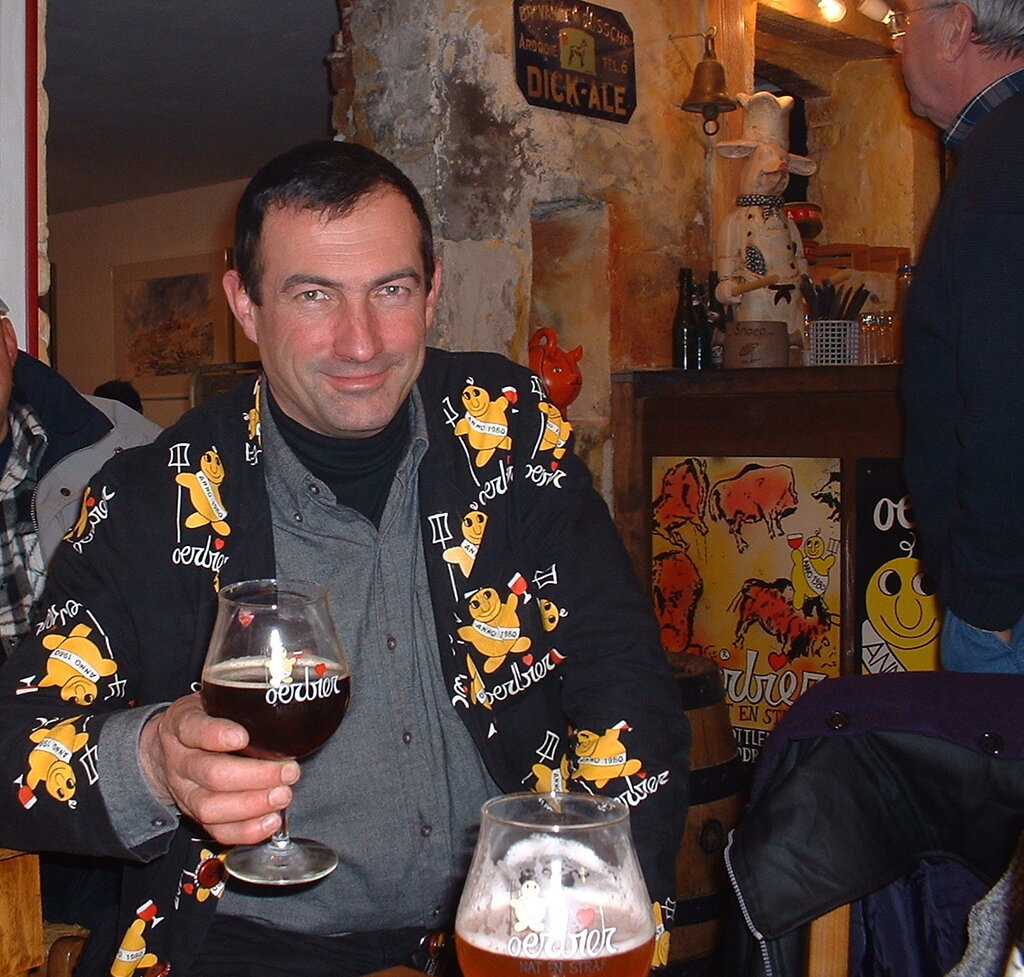
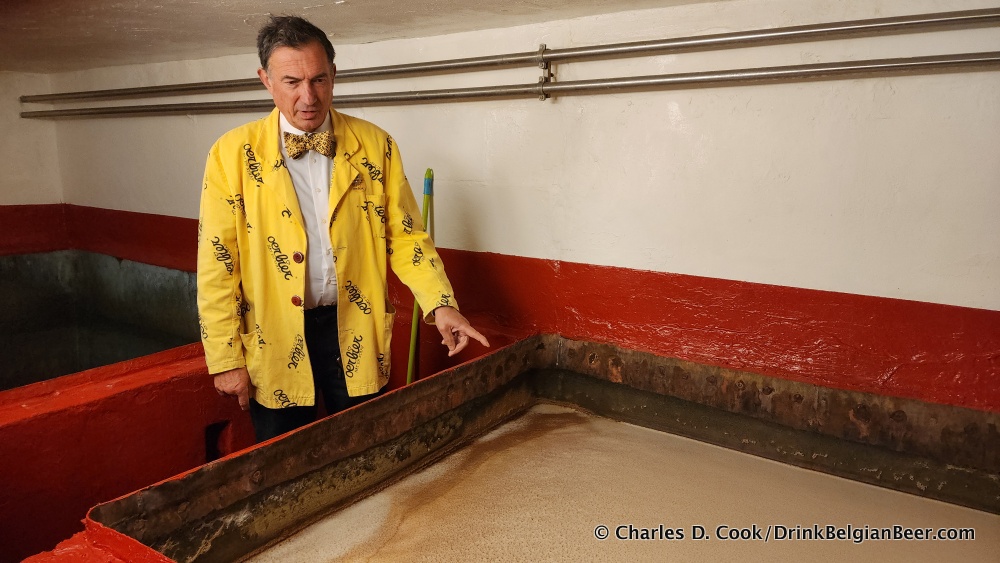
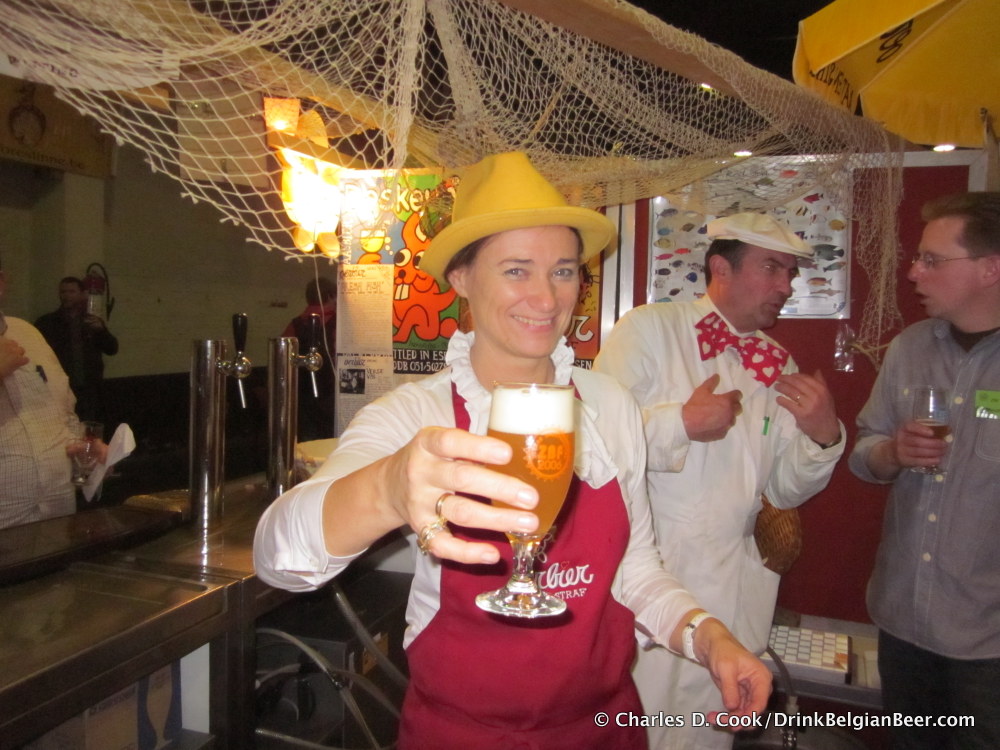
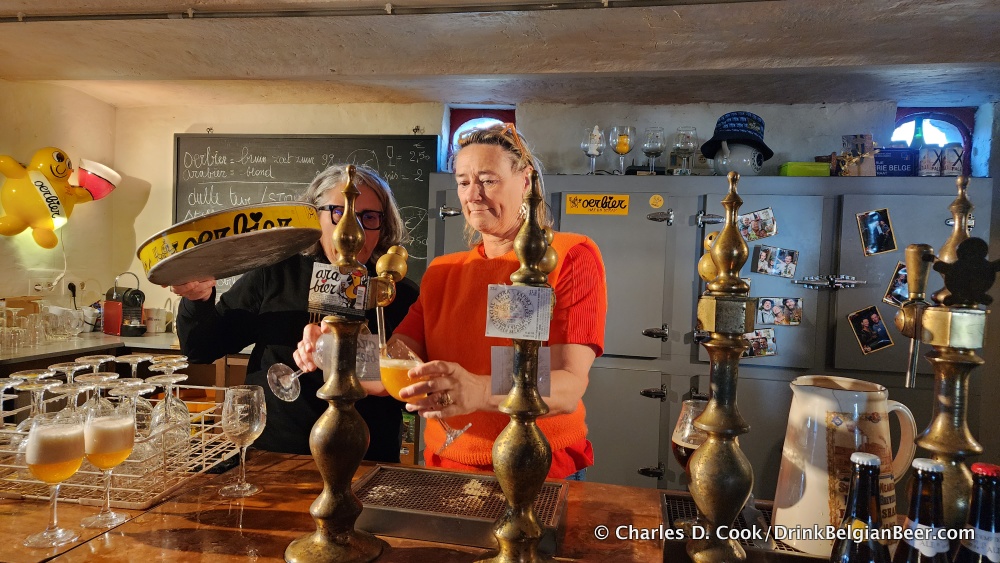
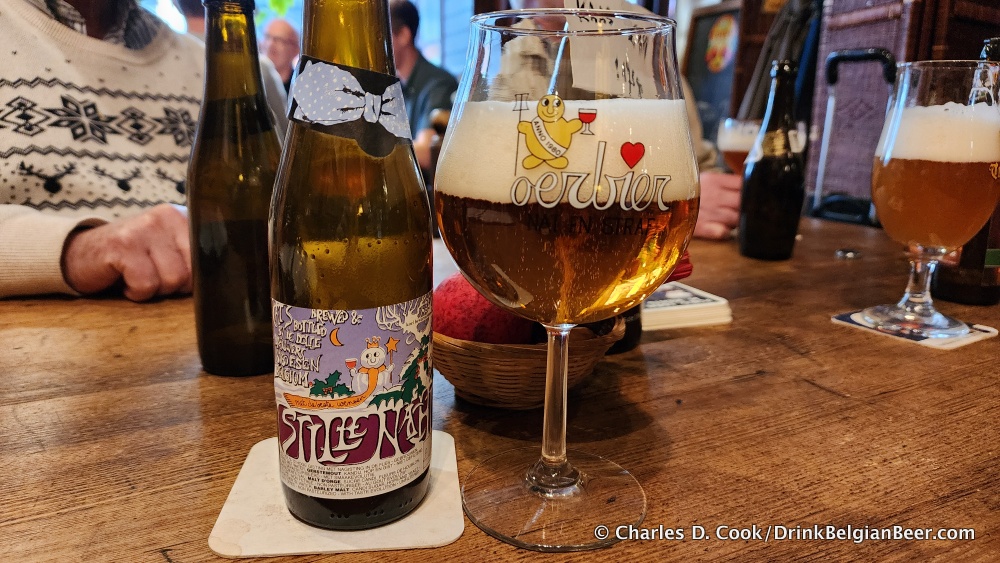
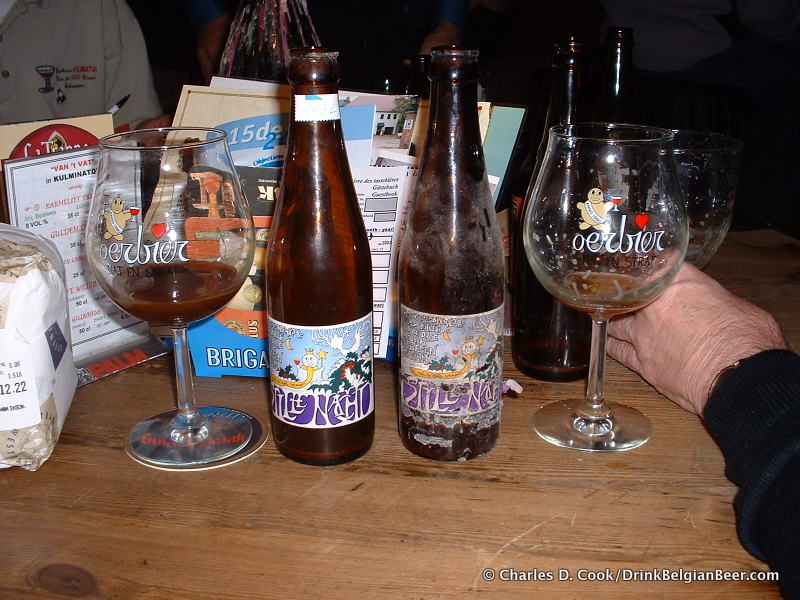
Kris Herteeler told me in April 2026: “We had an excellent relationship with Dirk and Leen. Of great note is that the third brew at De Dolle Brouwers in 1980 was a prototype of Stille Nacht, brewed with the malt recipe of Oerbier, but stronger. It was boiled for an extremely long time, and there were problems with fermentation, and we lagered (cold-conditioned) it for more than one year. The refermentation was not a success either, so the beer was flat. We were not happy with the beer, which we called De Dolle 1 Malig Speciaal Brouwsel, so we stored it aside from our other brews. In 1988, Dirk was interested in that brew, and we finally sold it to him at the price of Oerbier. In fact, he bought all of the bottles of that beer. We have none.”
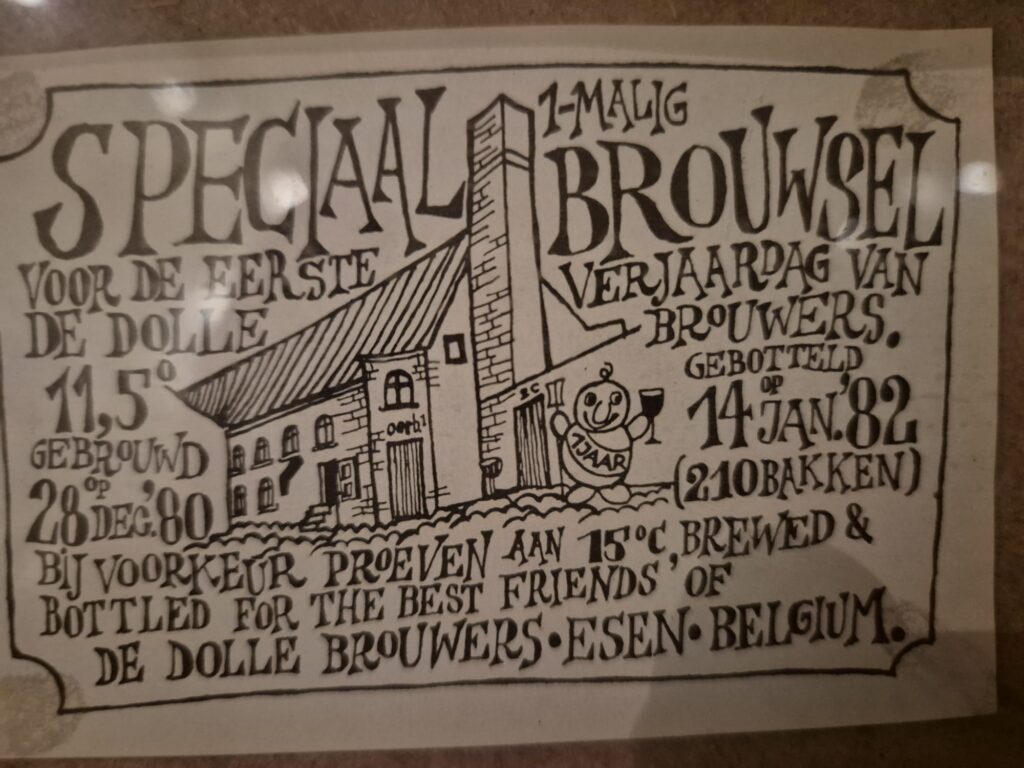
De Dolle 1 Maalig Speciaal Brouwsel was brewed on December 28th, 1980, and bottled on January 14, 1982. I enjoyed this amazing 11.5% abv dark strong ale about five or six times, and always loved it. Kris says: “This beer was undeniably the best beer we have ever brewed. It took two years to ferment. Some say it took six years. There were 20 bottles of 33 cl per crate. All the crates went to Kulminator.”
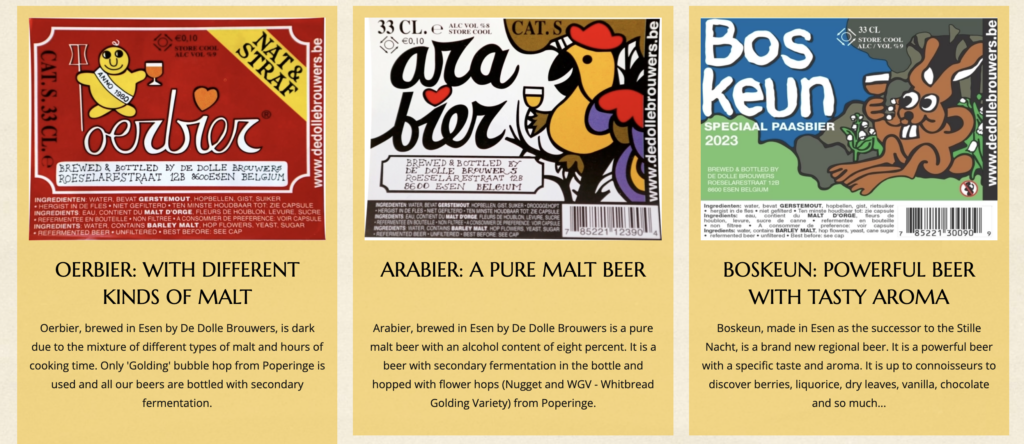
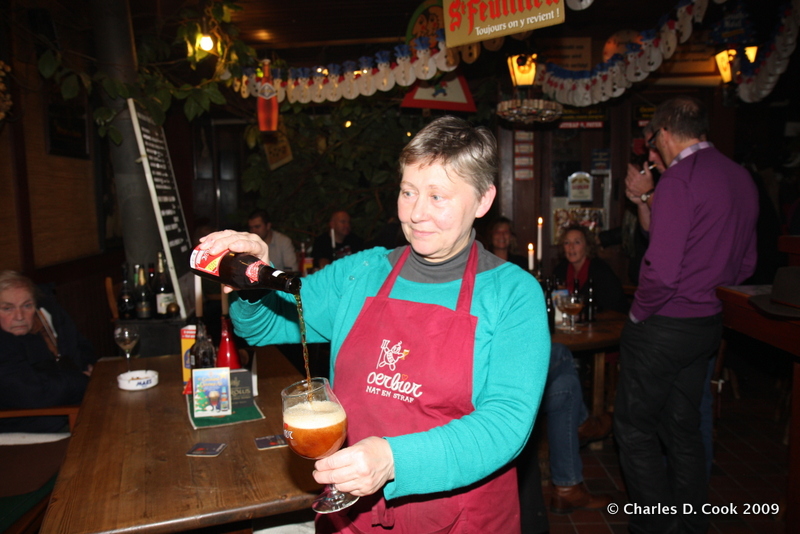
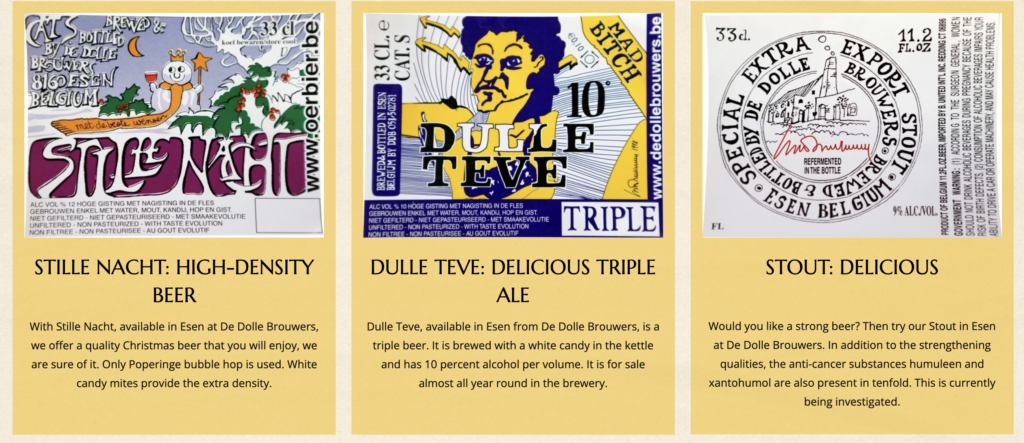
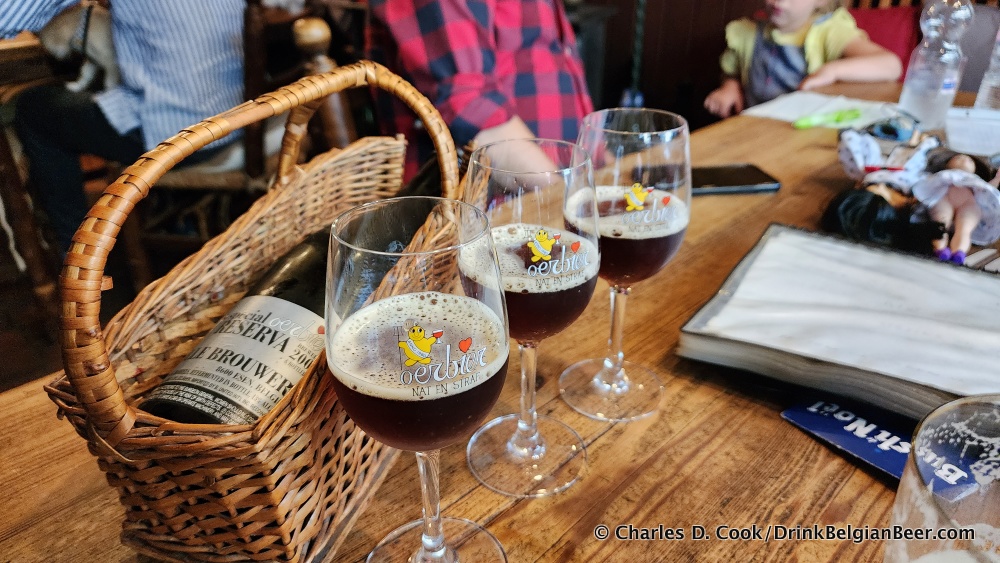
Dirk and Leen would visit De Dolle on Sundays, when Kulminator was closed, to purchase crates of beer, and De Dolle branded glassware to serve the beers in. De Dolle Brouwers brews some of the most interesting beers in the world, such as their flagship lineup of Arabier, Boskeun, Dulle Teve, Export Stout, Oerbier, Stille Nacht, and Oerbier Special Reserva. De Dolle also produces a number of barrel-aged brews that are among the most incredible and breathtakingly delicious beers on the planet. Most of these have a slight tart character, are very complex, and can be very wine-like, with high alcohol contents. Seek them out!
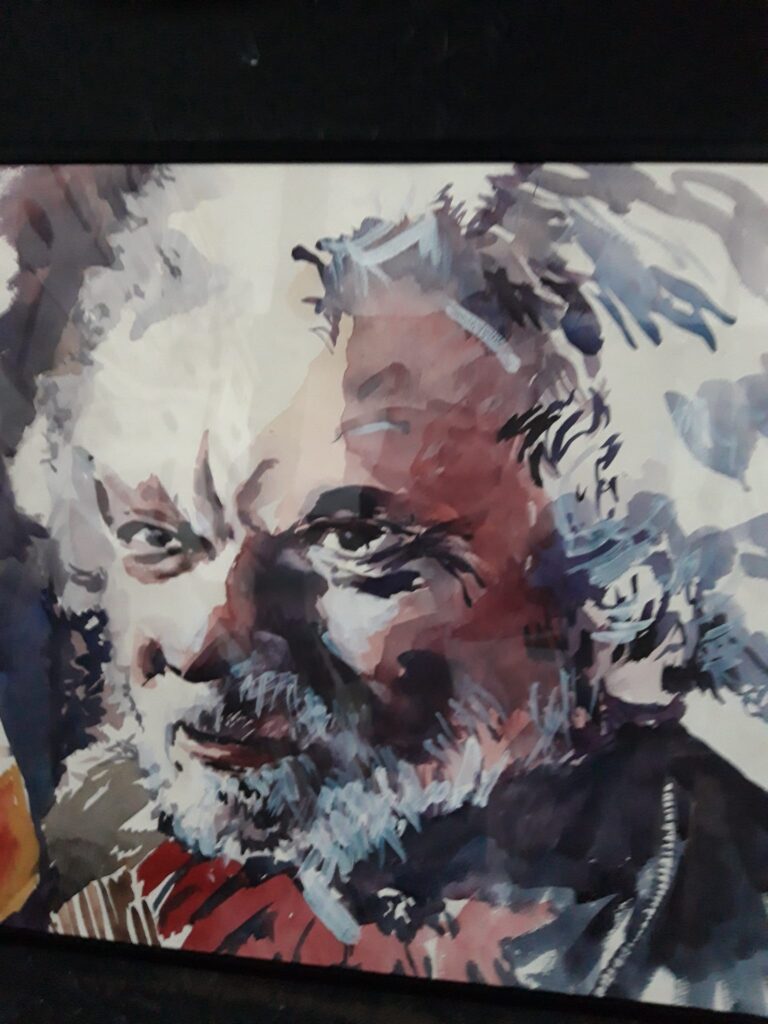
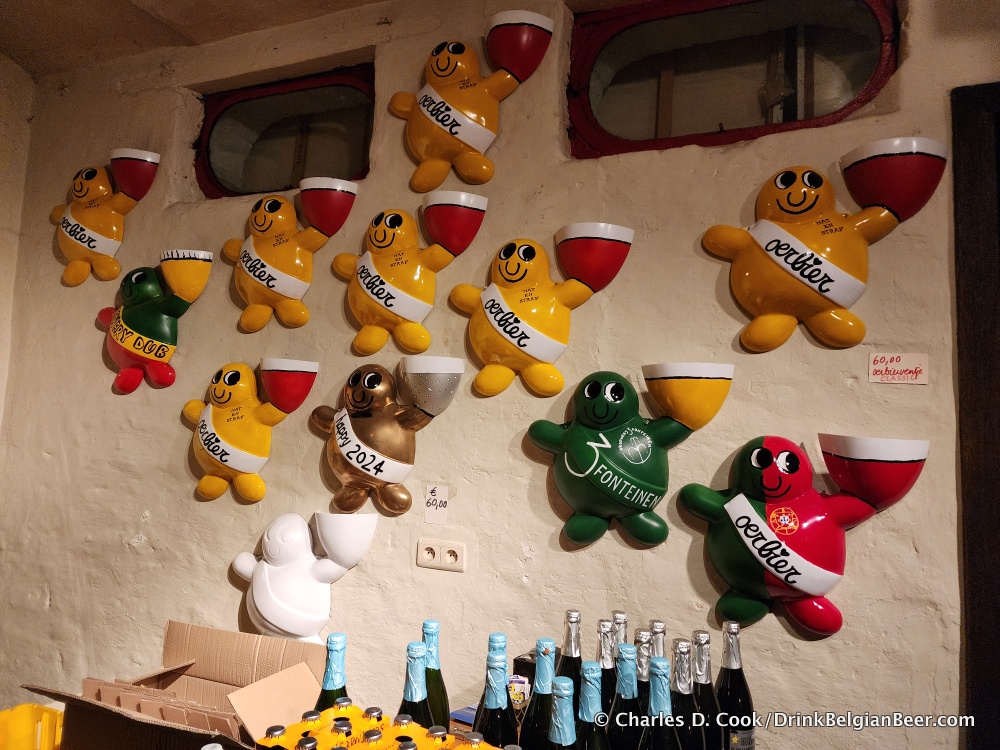
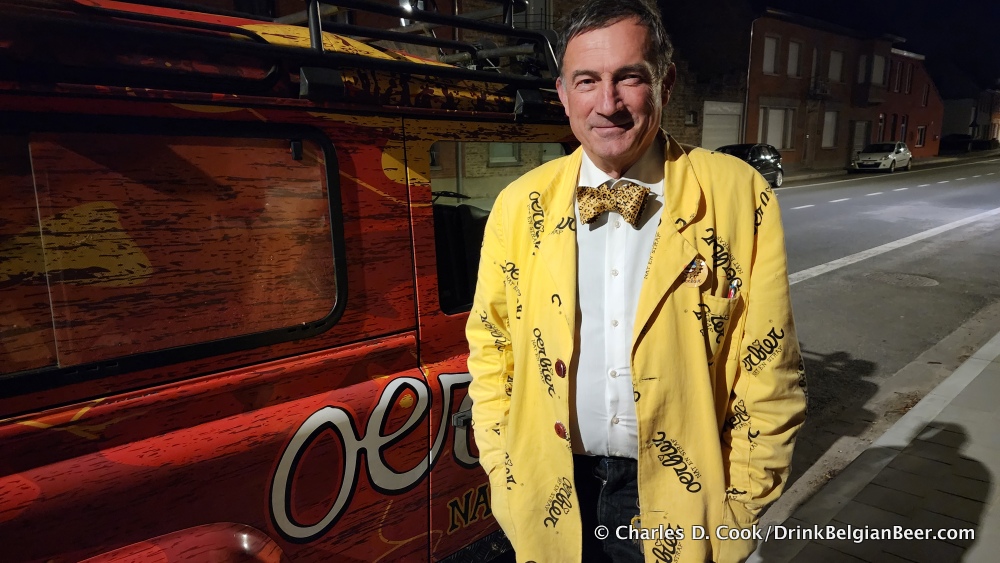
Kris is an accomplished artist, who created the images for the De Dolle beers, and also draws watercolor paintings. He also crafts the Oerbiermen seen below.
The excellent beers of De Struise Brouwers of Oostvleteren, West Flanders, were also popular on the Kulminator beer list.
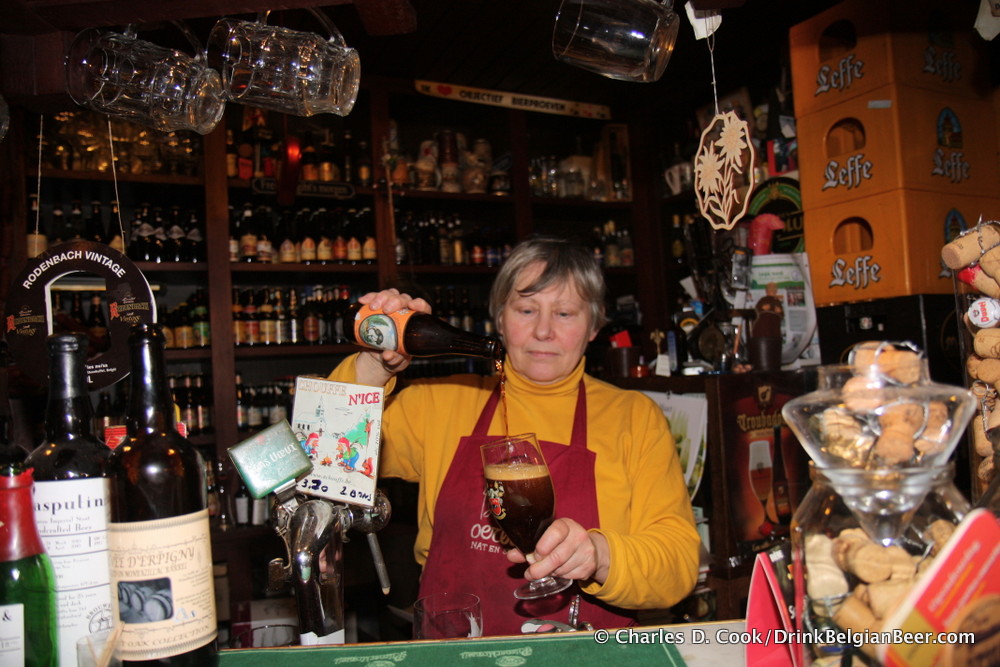
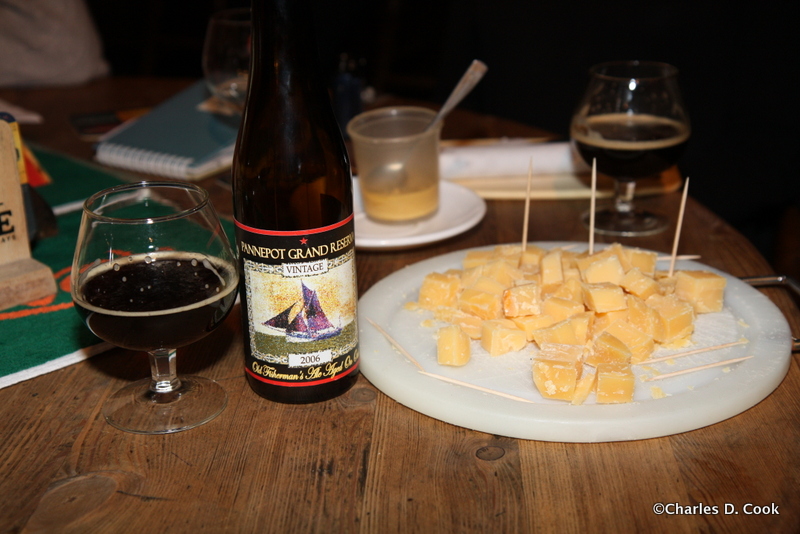
Food options were very limited at De Kulminator, with cheese plates and salami on offer.
Dirk and Leen used to do some special things to keep people returning to the Kulminator year after year. One was you could fill out a card with your name, birthdate and address, and you would be entered into a guest book. You would then receive a birthday card each year. When you returned with this card within six months, you would be given the draft beer of your choice. Your birthday card would then be stamped, and you could take it back home with you as a souvenir. This program was started on July 1, 1996.
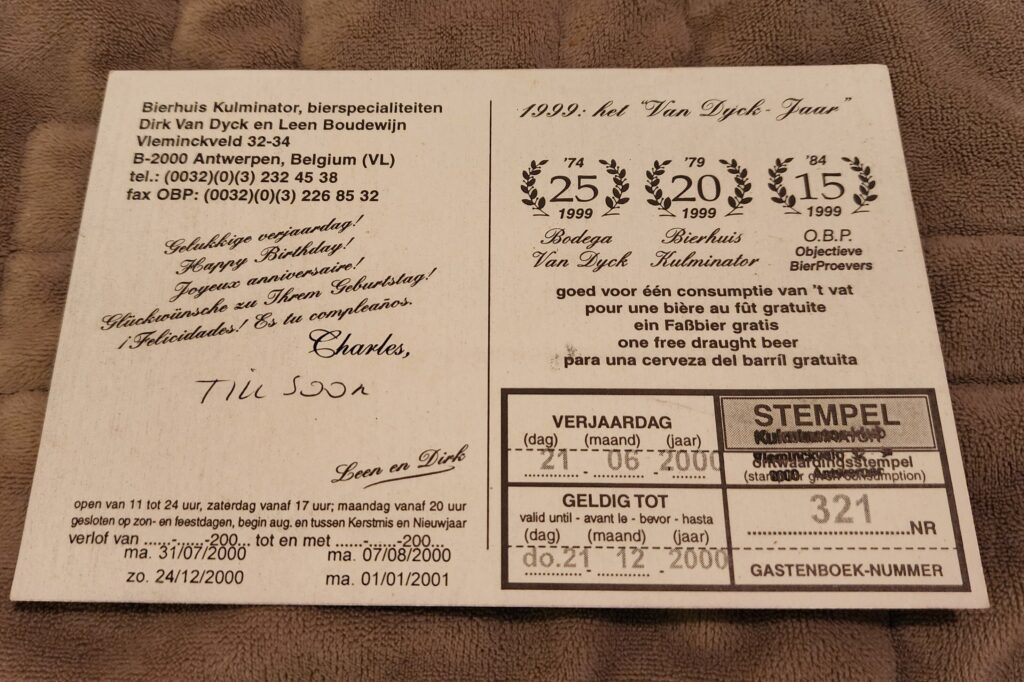
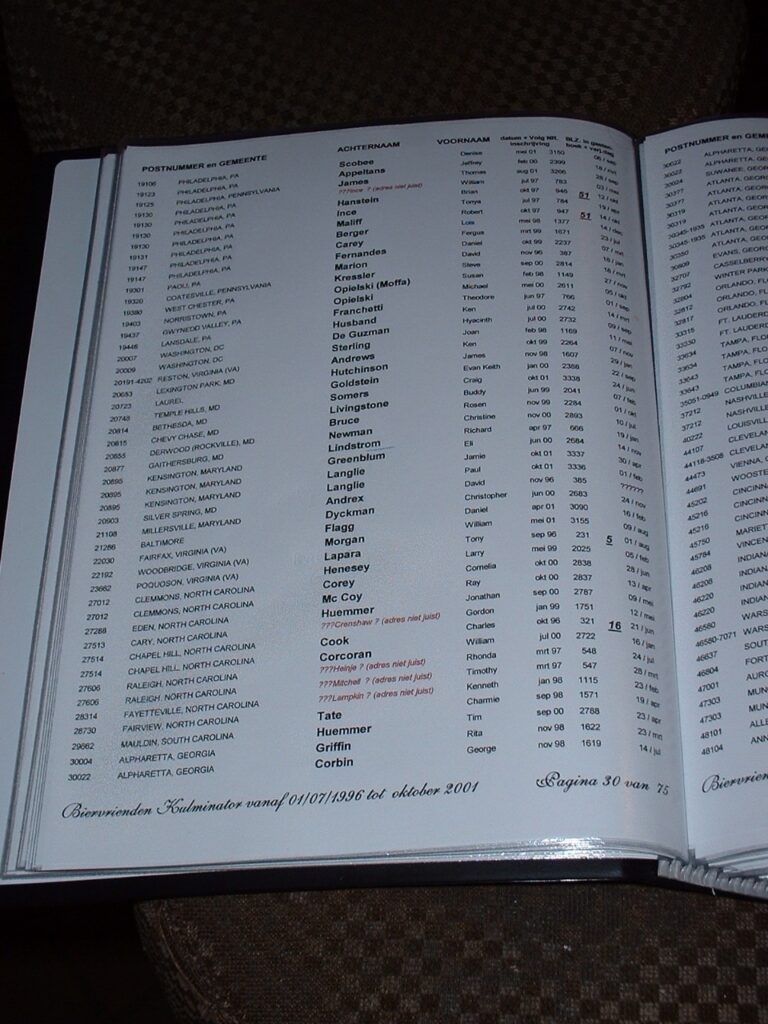
Patrons of the Kulminator loved this idea, and there were thousands of people in their guestbook.
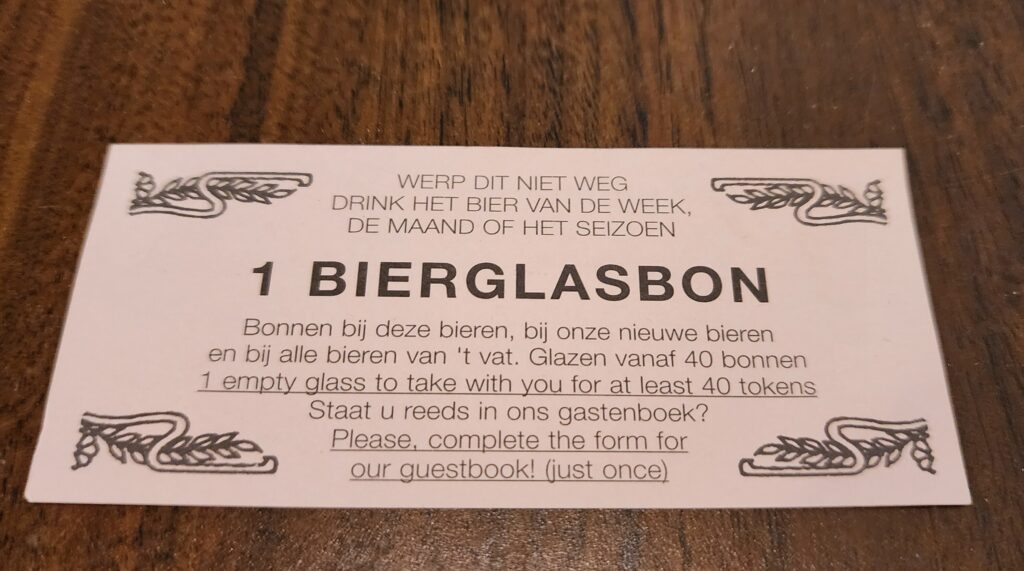
Another thing that was popular at Kulminator was giving patrons a few “bierglasbons,” which are essentially coupons, when you purchased certain draft beers. These could be redeemed for special glassware in a display case on the left at the back of the bar. The lowest price on any of the glasses was 40 bierglasbons, so the likelihood of acquiring enough bierglasbons to redeem for a glass for the casual beer tourist was not very high. I managed to redeem one glass over the years, and still have a number of these.
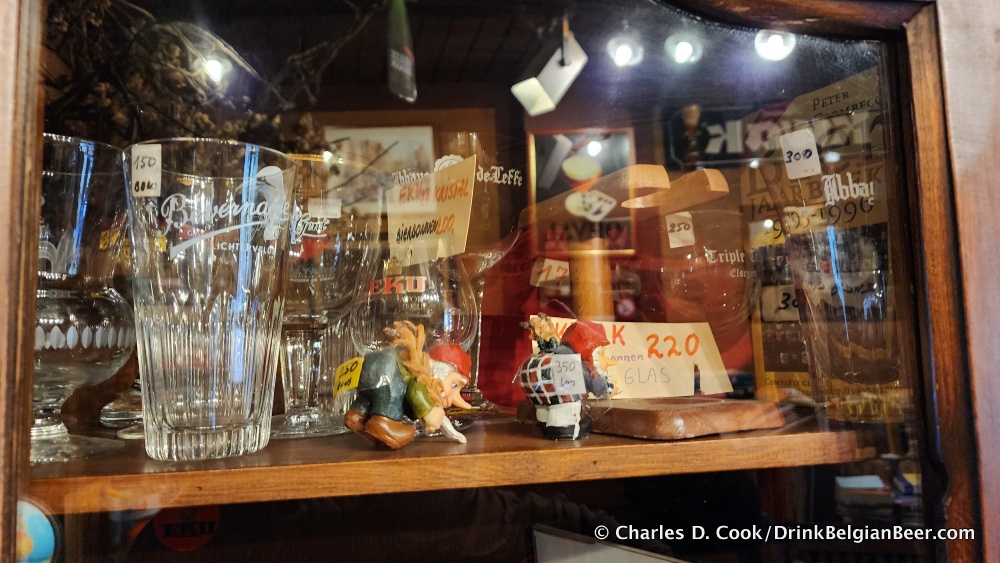
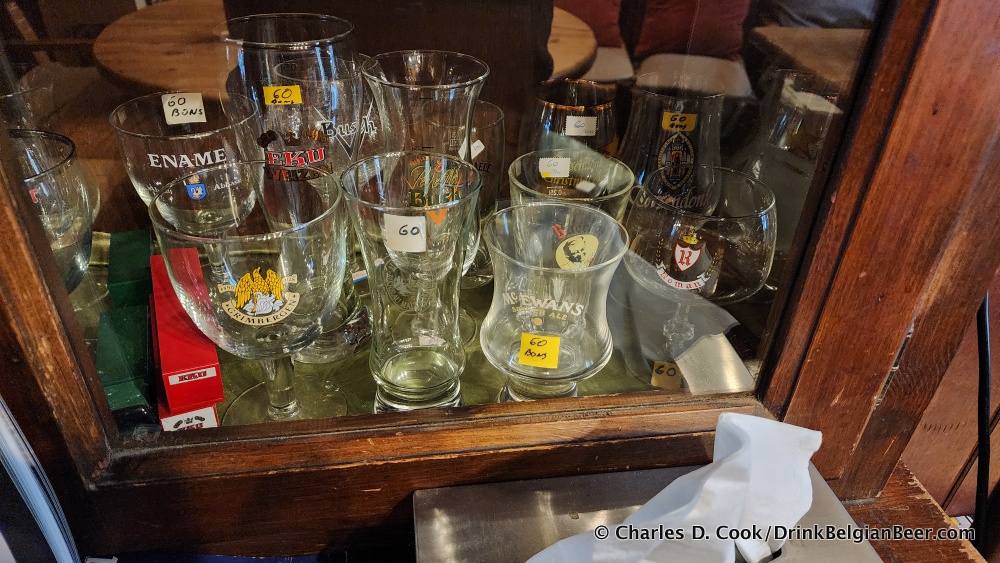
Regulars had a much easier time acquiring enough bierglasbons to redeem for vintage glassware. I think most beer tourists saw the bierglasbons as a cool souvenir to take home from their visit.
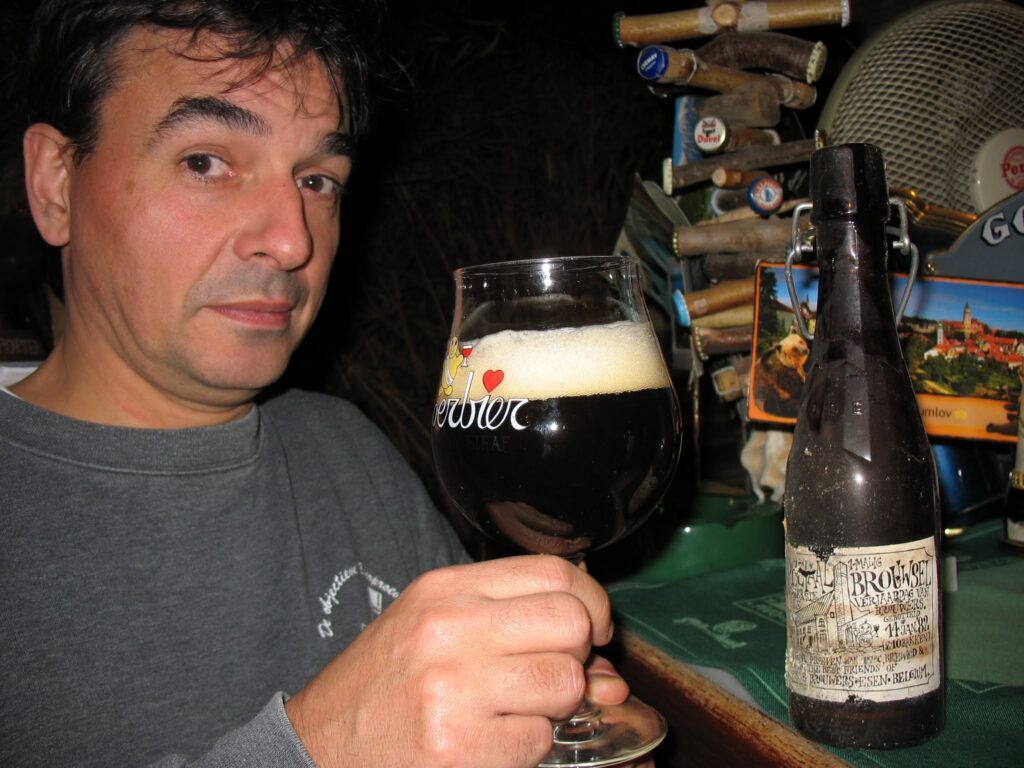
I asked Joris Pattyn, who has been a highly respected beer researcher, beer judge, and beer writer for nearly 50 years, to tell me some of his experiences about Kulminator over the years. Joris used to live in Antwerpen, and was a regular for a number of years. He had this to say:
“If you went to Kulminator first time around, say, immediately pre-COVID, it would be hard for you to imagine that place in its early days. I cannot claim that I was there from the very start – let alone the Bodega prequel – seen the fact that my starting point in the world of beer was another Antwerpener pub, Groot Ongenoegen, which lasted only a decade, twelve years or so. When I first entered the Kulminator (about a year after its opening) it appeared as a spacious pub, with a long counter, lined with a lot of barstools, an elevated space with two extra tables and behind that a narrow garden with more seats. In winter that was storage, just as from the very beginning, behind the counter a lot of… “stuff” was assembling.
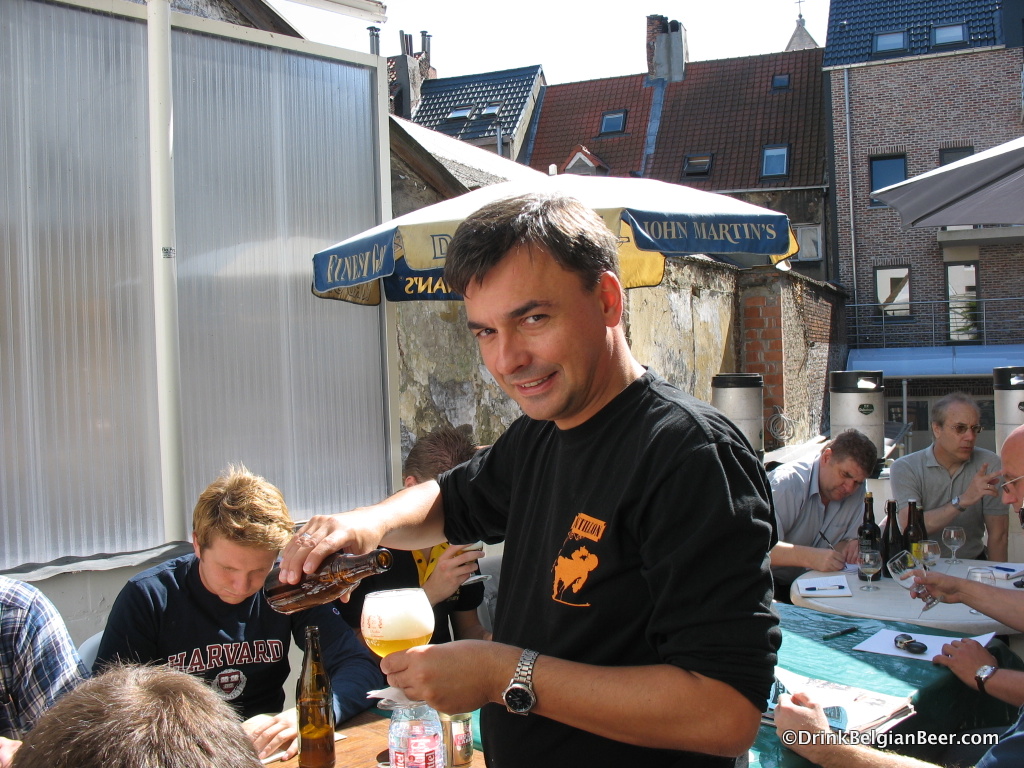
What was immediately impressive was Dirks’ place at the far wall there, where his computer – one of the early Apple’s – was to be found. He definitely must have been one of the very first landlords to run his business with the aid of programming. It was the same PC, a hundred times rebooted and reprogrammed, that kept doing the task until it finally gave in. The list… yeah that one. It was impressive from the beginning.
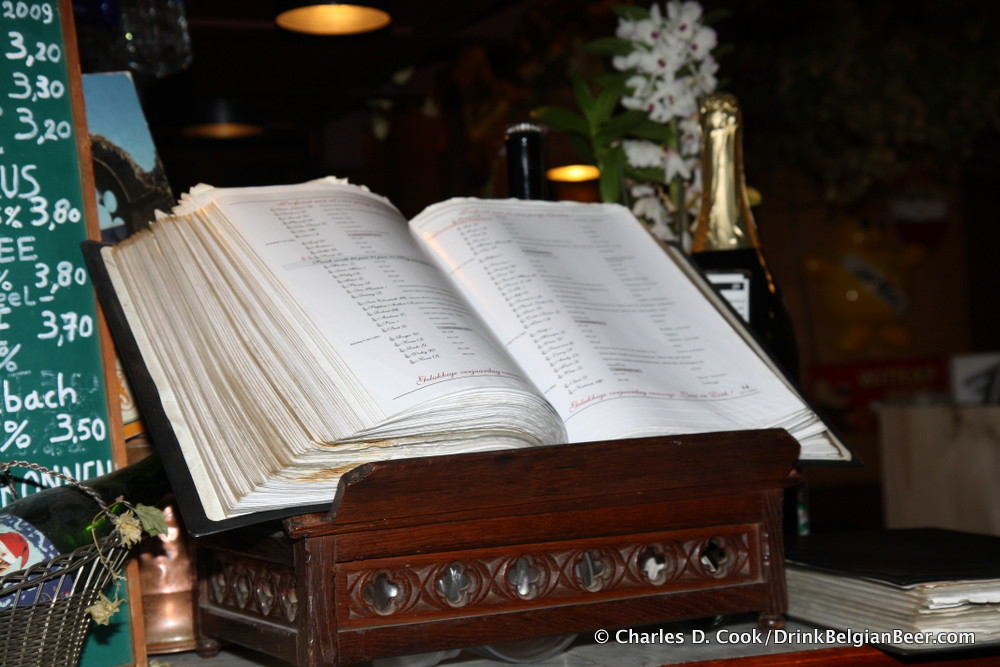
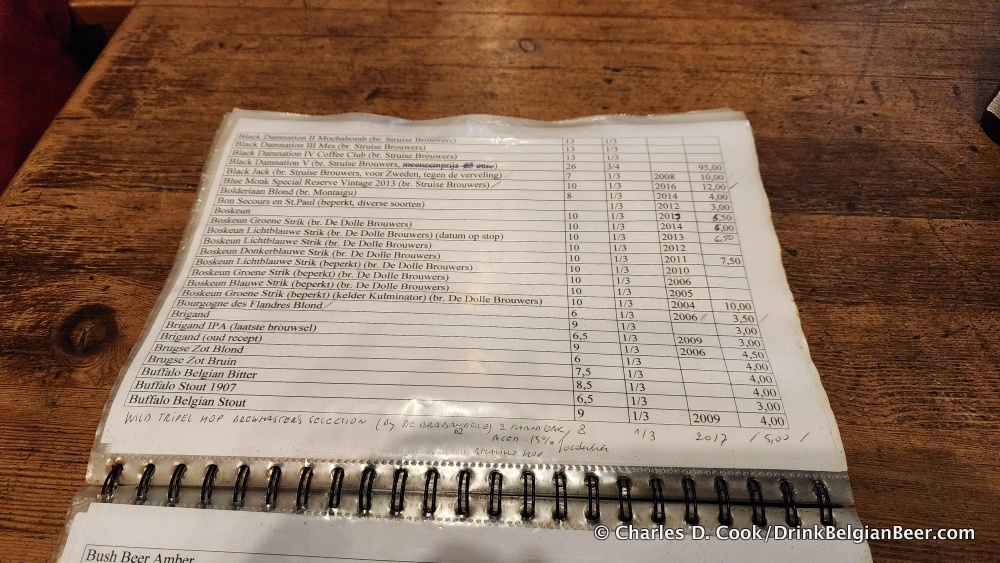
Mind you, in those days there were other bars with extensive beerlists, but they all suffered from the ‘momentarily non available’ disease. If the beer you asked for was on the Kulminator list, it WAS available, if maybe not to you. The difference with Dirks way of purchase was that, if he deemed a beer eligible for his list, he didn’t buy a crate. He bought three, four, five. Same with beers on tap – the pub being tie-free of course helping. Come to the early Kulminator on a weekend evening (never on Sundays). The pub is cracking full, the barstools taken in by the regulars, often personal friends of Dirk and Leen, having been Bodega regulars as well.
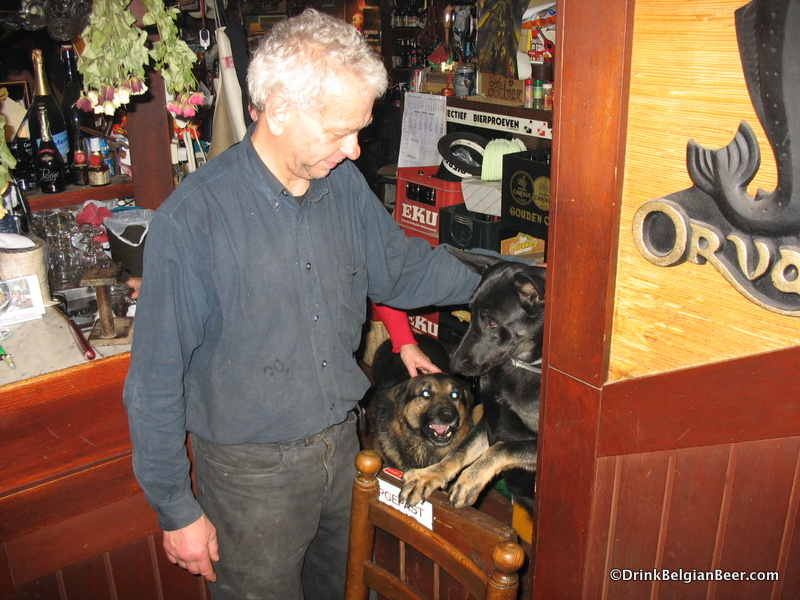
And lo and behold, servicing isn’t done by those two only, but by either a slightly older, shorter gentleman, or a younger beardy fellow. Respectively Koen and Balder, both brothers of Dirk. They never employed people outside their immediate family, and when Koen and then Balder stopped coming, they went on, and places in the pub started to diminish, beginning with the utmost end of the counter – which distressed me, as it was my preferred space. Mind you, after some years I was one of the few able to sit there, as the little swing door was guarded by two fearsome Alsatians. They knew me, but if you weren’t known… All through the years, one had to share Kulminator with animals. The dogs were usually behind the counter, but the many cats had the free roaming of the entire pub, and beyond. Severe, and even aggressive Dirk might have been to people he didn’t like, he was always forgiving towards animals, and they trusted him.
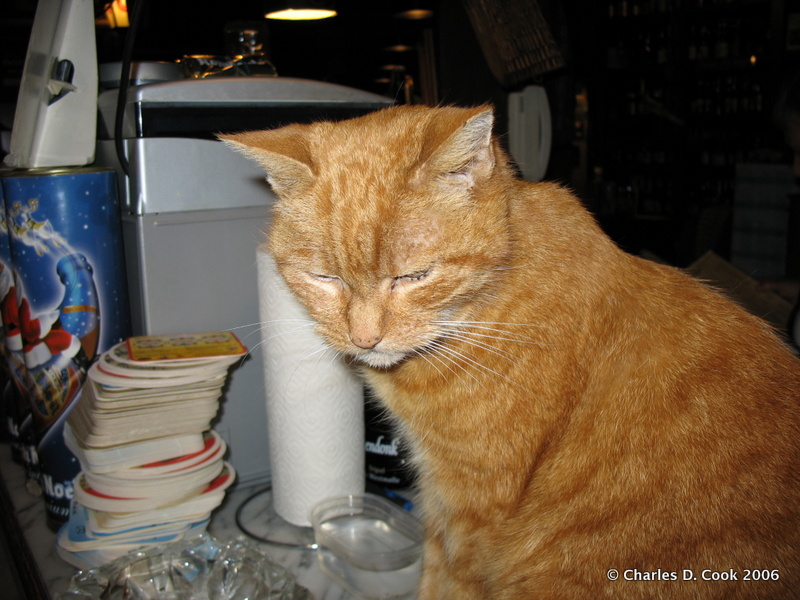
Kulminator has always been a place of contrasts. There was Dirks’ grumpiness, counterbalanced by the always affable Leen. Dirk might take a dislike on you (Dutchmen were often in a bad light), but if he was in a good mood, he turned into generosity itself. The closing hours (as weeks of holidays) were sacrosanct. Yet, in the early noughties I managed to arrange share-a-bottle sessions in the garden. That was with a lot of international beertasters “Yeah, they bring their own beer, but afterwards they spend a couple of thousand Euros on mine,” said Dirk when challenged about this.
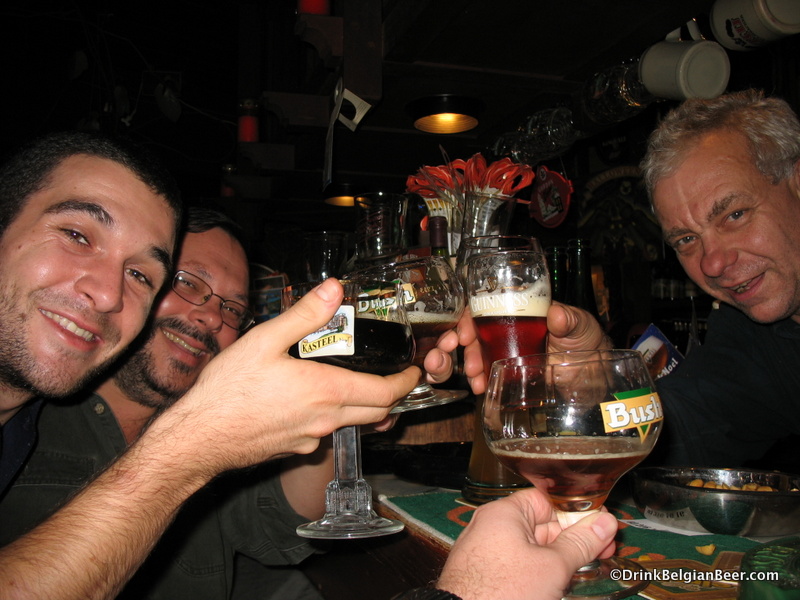
Foreign visitors. From the earliest days, Dutchmen were often seen, but the circumstances in Antwerpen were different, then. The town centre was alive until 3 to 4 AM, and people swarmed over the border, as alcohol control was near non-existent. It took until the eighties before people from further away started to be seen almost regularly. Mind you, by then Kulminator had seen the birthing of “Objectieve Bierproevers”, mainly thanks to Peter Crombecq and Dirk, and a few years later, we managed to contact not only the Dutch PINT, but also the British CAMRA, and so EBCU saw the light – even when that started in Brugge, not in Antwerpen. But from that time, people from all over the world started coming, and Dirk was very proud of his map where all the ’Kulminator friends’ were noted in, and it was an impressive sight indeed.
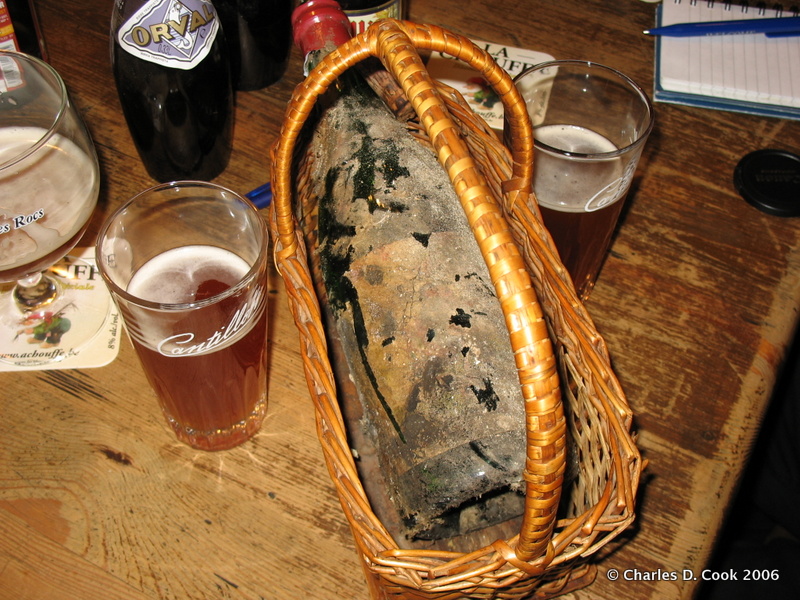
A bit later in history, it exploded completely when sites as Ratebeer started singing the praise of the pub, even naming it ‘best pub in the world’. Today, an Antwerpener beer pub sports beers from just about anywhere in the world, but in the early Kulminator days, that was way more restricted. Mind you, in the earliest days there used to be a small choice, that strangely enough, gradually diminished – and that was so for more bars than Kulminator alone. But Dirk had something special, the others didn’t have: German beer. Know it or not, the name “Kulminator” refers to one of the heaviest beers worldwide available in those days, Kulminator 28°b, made by the “Erste Kulmbacher Brauerei”, and Dirk has been importer for those beers for years, until the German breweries started to conglomerate.
Every year, Dirk went on a “pilgrimage” to the “Kulmbacher Bierwoche”, first and foremost for the festival, but returning with crates and kegs. At Kulminator, you could drink German Weisse on tap – even though that one was from a different brewery. The importance of Kulminator on the Belgian beerscene, and I daresay even European beerscene, cannot be overestimated. I already mentioned EBCU, but when Dirk– and later my auguste pompous self – started exploring Belgian and other beers, we were fighting a tide of leanness, familybrewers closing everywhere.
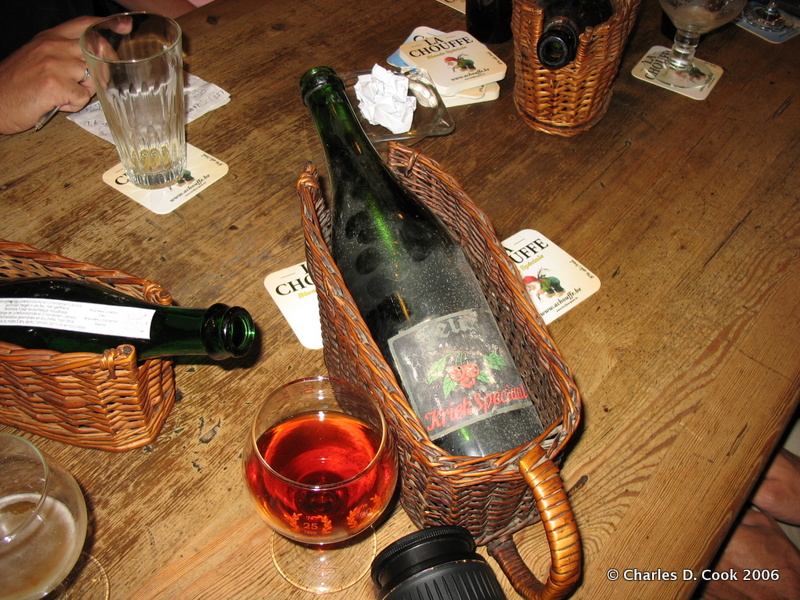
One of the main attractions of Kulminator to me, certainly in the beginning, was finding beers from brewers already years defunct, and still being able to sample resounding names of years gone by. Yes, in the same period the USA saw the turning of the tide, with people starting to search for taste, and a decennium later, that tsunami hit the UK as well. But in Belgium (as in Germany), with its heritage, the decline lasted at least 20 years longer than elsewhere. We kept fighting, and one of our main regrets was that we never succeeded to get Francophone Belgium along. Dirk might have been fiercely Flemish, but all great Walloon beers were always available in his place.
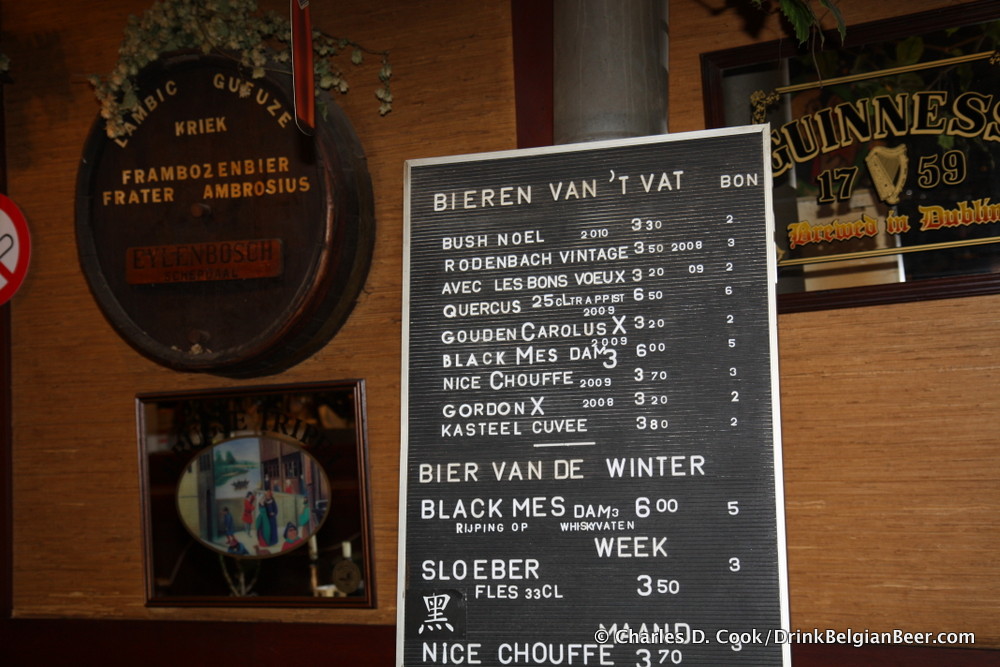
Alas, since COVID, the same decline seems to start all over again. The reverse of the coin? I could say that I left a supercars’ worth in beer, there. And looking back, I don’t regret it. During several years, Kulminator was literally my local, as I lived and worked at a good five minutes walking distance. But even living further, I always loved coming back, and even in the latter days, I managed to bring foreign brewers to the spot. Others, as Alan from Hair of the Dog, found it by themselves. I lost hours of my life, yet learned a lot more (and not always about beer). Now that Kulminator has finally closed, I look back with tenderness.”
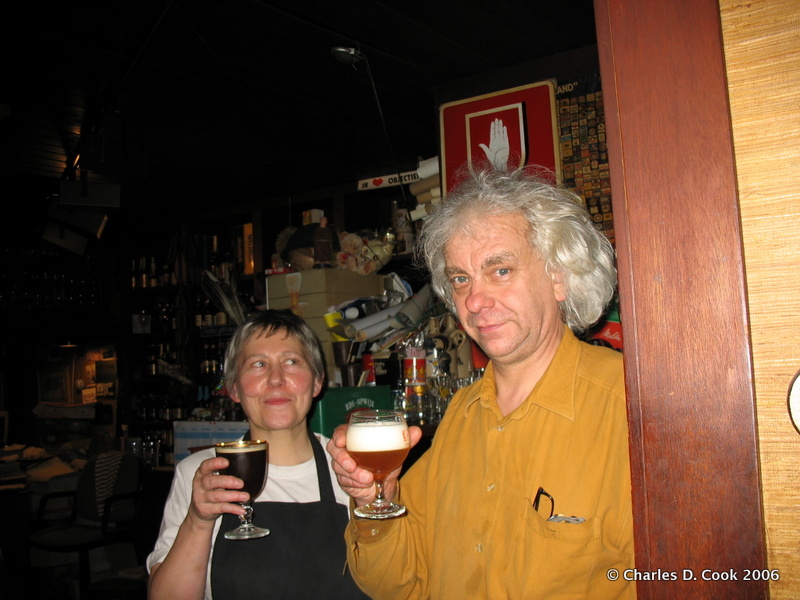
What a lot of great memories Joris had! Many thanks to him for giving us an in depth look at De Kulminator from the early days, and through the years.
Bierhuis Kulminator delighted beer lovers from around the world for nearly 47 years. The legacy of Dirk Van Dyck and Leen Boudewijn will never be forgotten.
I will close with this: after twenty seven and a half years of visiting Kulminator, I want to say thanks to Dirk and Leen for all of the memories, and wish them a happy retirement. I enjoyed every single visit! De Kulminator felt like a home away from home on my many visits to Belgium.
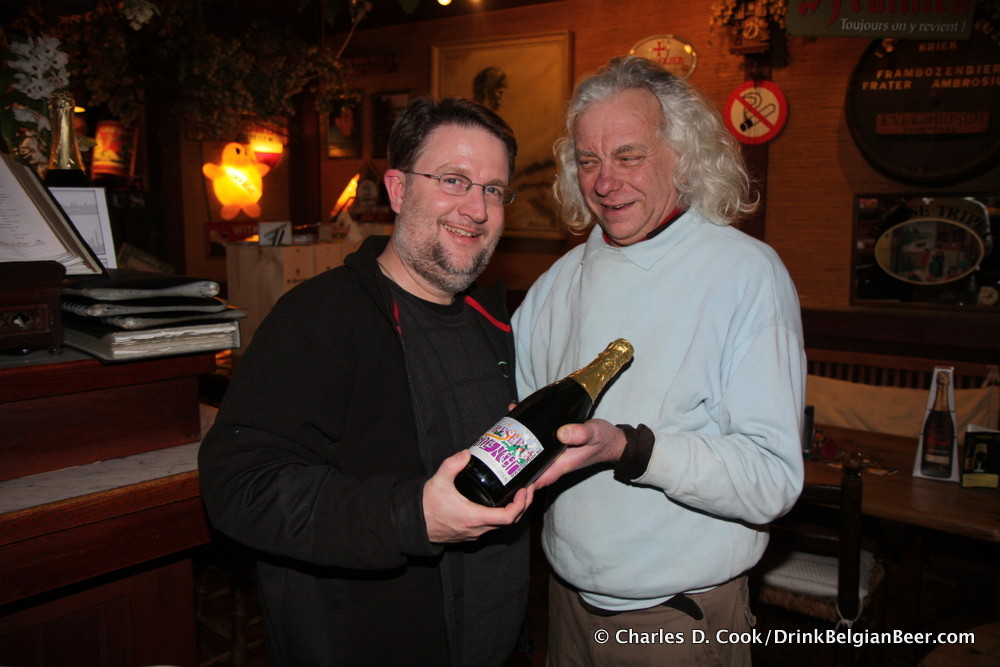
I also wish all of the beer lovers from across the globe that I enjoyed camaraderie and beers with there the same: thanks for the memories, beer friends!
If you like this website, please like our Facebook page here.
And our Instagram page here.
And our Twitter page here.
Leave a Reply